
Boule de Suif
Français
Boule de Suif · Français, Project Gutenberg #10746
LireGuy de Maupassant · 1880
Dix voyageurs partagent une diligence hors de Rouen occupée, et un panier de provisions montre de quoi chacun est fait.
À l’hiver 1870, Rouen est occupée par les Prussiens ; dix personnes partent en diligence pour Le Havre : négociants, industriels, un comte, deux religieuses, un démocrate et une jeune prostituée surnommée Boule de Suif. Retenus à l’auberge de Tôtes par un officier prussien, les voyageurs respectables doivent décider ce qu’ils osent lui demander. La nouvelle de Maupassant parut en avril 1880 dans Les Soirées de Médan et le fit connaître.
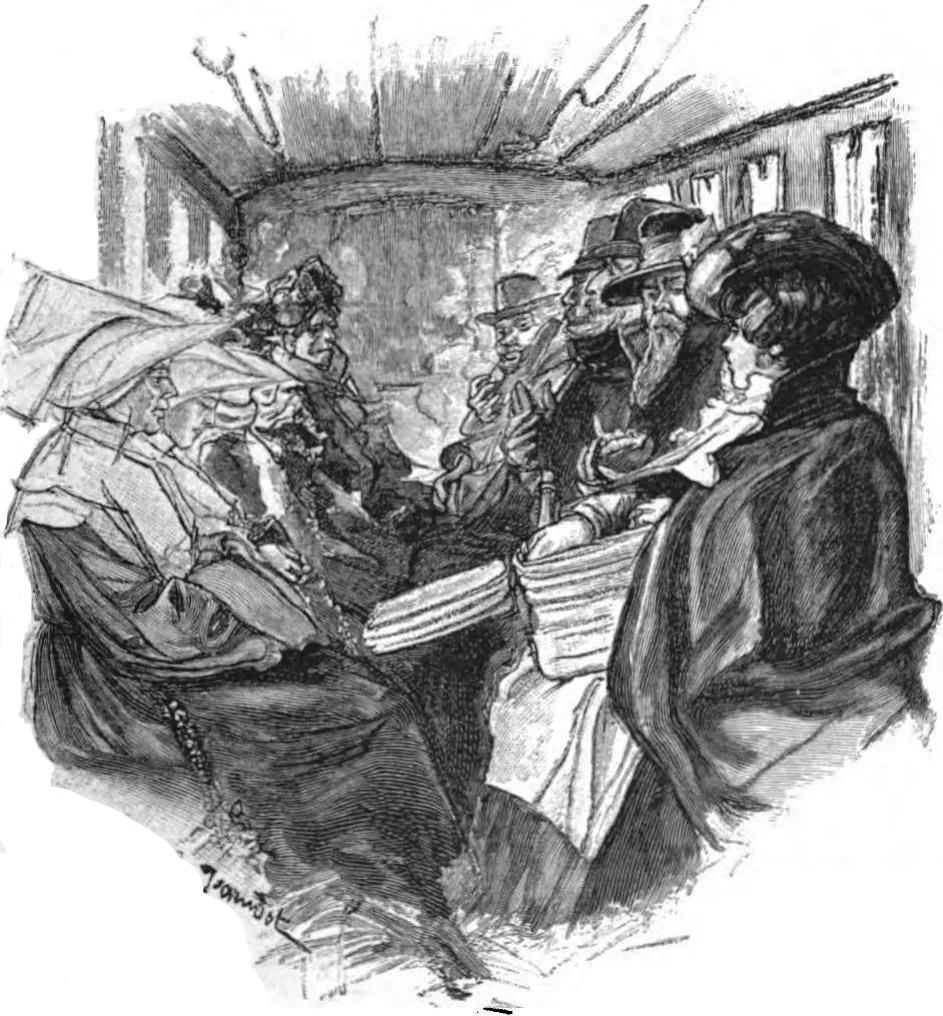
Boule de Suif is a short story that works like a closed-room drama on wheels. Ten people are shut inside a coach and then an inn for days, and Maupassant uses that confinement to show how a group of comfortable, patriotic, churchgoing French citizens behaves when conscience costs something. It still reads as alive because the situation is not tied to 1870: a clique of respectable people, a person they look down on, a crisis, and the speed with which principles turn into convenience. The war is a backdrop, never a lecture, and the story’s anger is held inside plain, exact description rather than speeches.
The story appeared in April 1880 in Les Soirées de Médan, a collection of six war stories by writers around Émile Zola, who opened the book with his own “L’Attaque du moulin”. Boule de Suif was the volume’s most famous piece and launched Maupassant’s career; Flaubert, his mentor, is reported to have called it “a masterpiece that will endure.” It showed that the Naturalist method of cold observation could be turned into something short, ironic and precisely shaped. John Ford later said his 1939 film Stagecoach was “really ‘Boule de Suif’”, and the story has returned in other films and a graphic novel.
Watch the food. The basket of provisions, who has brought what, who refuses, who eats, tells you more about every passenger than their speeches do. Notice how the group’s language changes as the journey stalls: first the respectable people ignore Boule de Suif, then flatter her, then argue for her duty. The ending is not a rescue, and it is not a neat moral; it leaves a question rather than a verdict. Vietnamese readers meet it under the title Viên Mỡ Bò or, in this edition, Cục Mỡ, with Maupassant’s French rendering a nickname that is itself an insult.
Présentation rédigée pour LitMundi avec l’aide de l’IA et vérifiée d’après les sources ci-dessous.
La disponibilité des traductions reste à étudier. Un brouillon ne prouve pas l’absence d’une traduction.
← Retour à la collection