
Boule de Suif
Français
Boule de Suif · Français, Project Gutenberg #10746
LeerGuy de Maupassant · 1880
Diez viajeros comparten una diligencia al salir de Ruan ocupada, y una cesta de comida revela de qué pasta está hecho cada uno.
En el invierno de 1870, con Ruan ocupada por las tropas prusianas, diez personas salen en diligencia hacia Le Havre: comerciantes de vino, industriales, un conde, dos monjas, un demócrata y una joven prostituta apodada Boule de Suif. Detenidos en una posada de Tôtes por un oficial prusiano, los viajeros respetables deben decidir qué se atreven a pedirle. El relato de Maupassant apareció en abril de 1880 en Les Soirées de Médan y le dio nombre.
No hay una traducción publicada en el idioma de esta interfaz. Puedes leer el original u otra edición disponible.
Leer · Français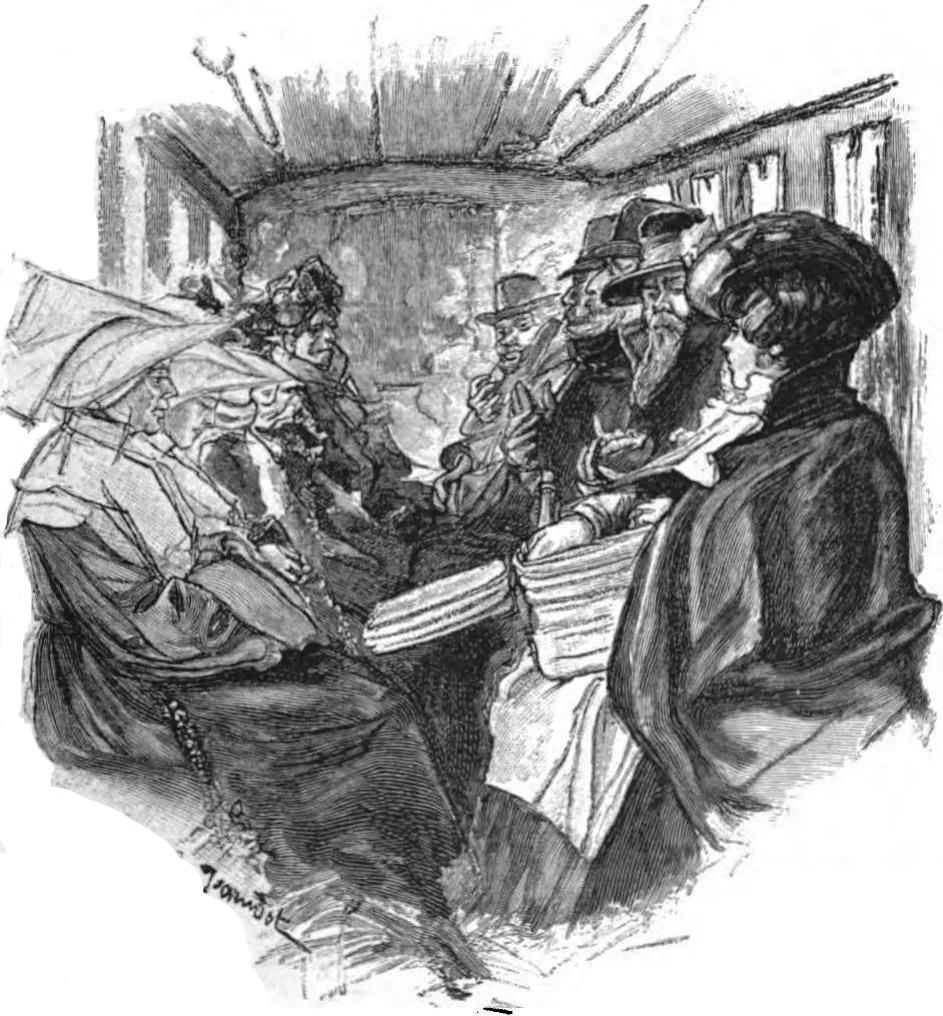
Boule de Suif is a short story that works like a closed-room drama on wheels. Ten people are shut inside a coach and then an inn for days, and Maupassant uses that confinement to show how a group of comfortable, patriotic, churchgoing French citizens behaves when conscience costs something. It still reads as alive because the situation is not tied to 1870: a clique of respectable people, a person they look down on, a crisis, and the speed with which principles turn into convenience. The war is a backdrop, never a lecture, and the story’s anger is held inside plain, exact description rather than speeches.
The story appeared in April 1880 in Les Soirées de Médan, a collection of six war stories by writers around Émile Zola, who opened the book with his own “L’Attaque du moulin”. Boule de Suif was the volume’s most famous piece and launched Maupassant’s career; Flaubert, his mentor, is reported to have called it “a masterpiece that will endure.” It showed that the Naturalist method of cold observation could be turned into something short, ironic and precisely shaped. John Ford later said his 1939 film Stagecoach was “really ‘Boule de Suif’”, and the story has returned in other films and a graphic novel.
Watch the food. The basket of provisions, who has brought what, who refuses, who eats, tells you more about every passenger than their speeches do. Notice how the group’s language changes as the journey stalls: first the respectable people ignore Boule de Suif, then flatter her, then argue for her duty. The ending is not a rescue, and it is not a neat moral; it leaves a question rather than a verdict. Vietnamese readers meet it under the title Viên Mỡ Bò or, in this edition, Cục Mỡ, with Maupassant’s French rendering a nickname that is itself an insult.
Introducción redactada para LitMundi con ayuda de IA y contrastada con las fuentes que se indican abajo.
La disponibilidad de traducciones sigue en estudio. Un borrador no demuestra que no exista una traducción.
← Volver a la colección