
Boule de Suif
Français
Boule de Suif · Français, Project Gutenberg #10746
ReadGuy de Maupassant · 1880
Ten passengers share a stagecoach out of occupied Rouen, and one hamper of food reveals what each of them is made of.
In the winter of 1870, with Prussian troops occupying Rouen, ten people leave in a stagecoach for Le Havre: wine merchants, manufacturers, a count, two nuns, a democrat, and a young prostitute nicknamed Boule de Suif. Stopped at an inn in Tôtes by a Prussian officer, the respectable passengers must decide what they are willing to ask of her. Maupassant’s story appeared in April 1880 in Les Soirées de Médan and made his name.
No translation is published in this interface language yet. You can read the original or another available edition.
Read · Français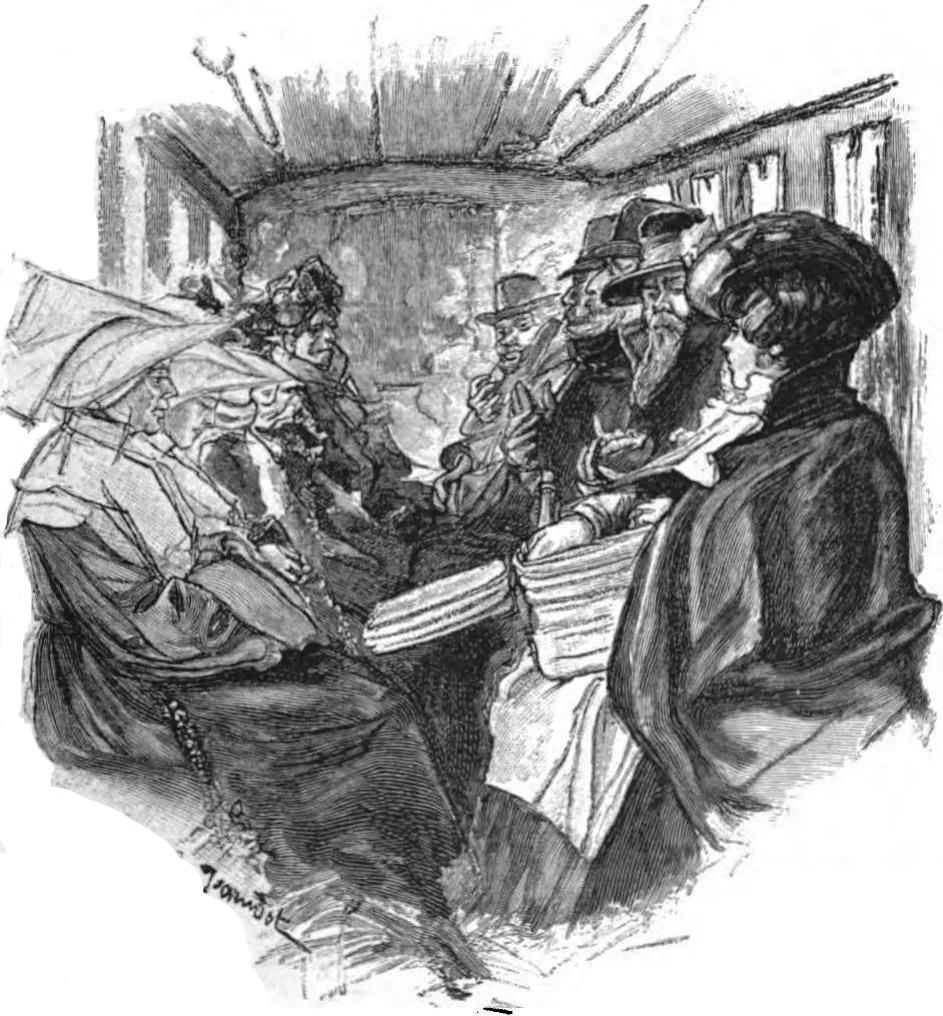
Boule de Suif is a short story that works like a closed-room drama on wheels. Ten people are shut inside a coach and then an inn for days, and Maupassant uses that confinement to show how a group of comfortable, patriotic, churchgoing French citizens behaves when conscience costs something. It still reads as alive because the situation is not tied to 1870: a clique of respectable people, a person they look down on, a crisis, and the speed with which principles turn into convenience. The war is a backdrop, never a lecture, and the story’s anger is held inside plain, exact description rather than speeches.
The story appeared in April 1880 in Les Soirées de Médan, a collection of six war stories by writers around Émile Zola, who opened the book with his own “L’Attaque du moulin”. Boule de Suif was the volume’s most famous piece and launched Maupassant’s career; Flaubert, his mentor, is reported to have called it “a masterpiece that will endure.” It showed that the Naturalist method of cold observation could be turned into something short, ironic and precisely shaped. John Ford later said his 1939 film Stagecoach was “really ‘Boule de Suif’”, and the story has returned in other films and a graphic novel.
Watch the food. The basket of provisions, who has brought what, who refuses, who eats, tells you more about every passenger than their speeches do. Notice how the group’s language changes as the journey stalls: first the respectable people ignore Boule de Suif, then flatter her, then argue for her duty. The ending is not a rescue, and it is not a neat moral; it leaves a question rather than a verdict. Vietnamese readers meet it under the title Viên Mỡ Bò or, in this edition, Cục Mỡ, with Maupassant’s French rendering a nickname that is itself an insult.
Introduction written for LitMundi with AI assistance and checked against the sources listed below.
Translation availability is still being researched. A draft is not evidence that no translation exists.
← Back to collection