
Sultana's Dream
English
Sultana's Dream · English, The Indian Ladies' Magazine 1905 (Penn transcription)
LeerRokeya Sakhawat Hossain · 1905
Una mujer sueña que entra en Ladyland, donde las mujeres dirigen el país y los hombres se quedan en casa.
En un sueño, una mujer es guiada por Ladyland, un país donde gobiernan las mujeres, la ciencia funciona con energía solar y control del clima, y los hombres viven recluidos. Rokeya Sakhawat Hossain da la vuelta a la costumbre del purdah y discute cada estereotipo llevando su lógica hasta el final. Es breve, juguetón y más afilado de lo que sugiere su tono amable.
No hay una traducción publicada en el idioma de esta interfaz. Puedes leer el original u otra edición disponible.
Leer · English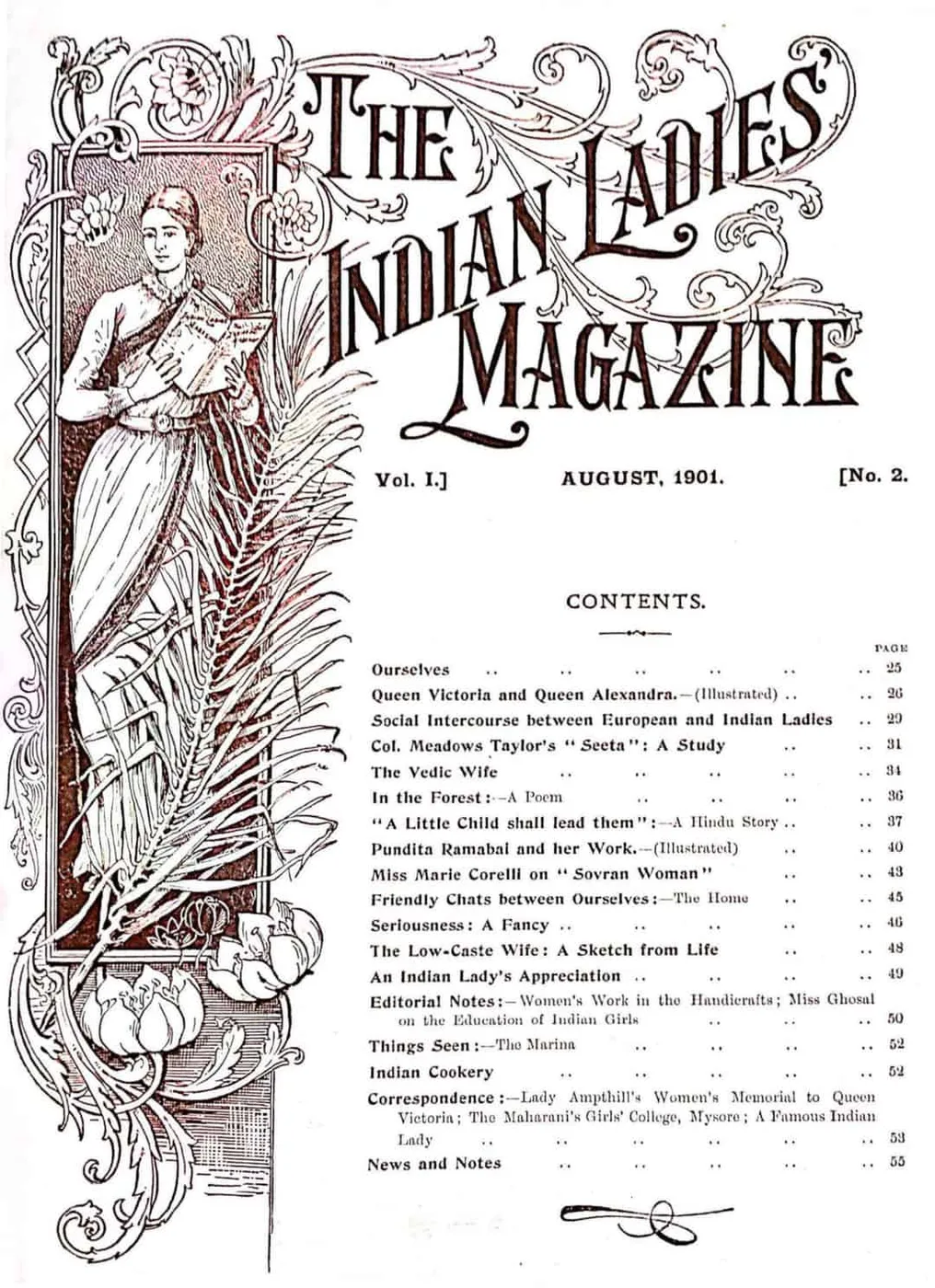
Sultana’s Dream is a short feminist science-fiction story set in Ladyland, a country where women run public life and men stay indoors, the practice of purdah turned upside down. It can be read in a single sitting, and its humour still lands: instead of shouting at gender stereotypes, it takes them seriously and follows the logic through. Rokeya Sakhawat Hossain wrote it in English, at about twenty-five, and the pages are lighter and more pointed than the word utopia suggests. A reader today will recognise the questions at its centre: who keeps the house, who is trusted with power, and who decides what counts as strength.
The story appeared in 1905 in The Indian Ladies Magazine, a Madras periodical, and in book form in 1908. Wikipedia calls it one of the earliest proto-feminist texts in its genre. What was new was the method: Rokeya lets technology carry the social argument. Ladyland has flying cars, farming without heavy labour, solar heat gathered and stored, and weather under control; crime has faded because men, the story reasons, were blamed for it, and the working day lasts two hours. In 2024 the work was inscribed on UNESCO’s Memory of the World Register for Asia and the Pacific, and artists keep returning to it, among them Chitra Ganesh, whose 2018 linocuts illustrate it, and Isabel Herguera, whose animated film dates from 2023.
While reading, notice the deadpan tone. The narrator, Sultana, is guided by a companion who explains each marvel as if it were common sense, and the comedy comes from how reasonable the reversal sounds. Notice too how often a practical invention is answered with a social point, and how little the story needs villains. The author lived what she wrote about: a Bengali Muslim woman in British India, she founded a girls’ school after her husband’s death, moved it to Calcutta in 1911 and ran it for twenty-four years. For readers in Vietnam and elsewhere in Asia, the story is an early voice from a colonised society arguing about education and women’s place in public life.
Introducción redactada para LitMundi con ayuda de IA y contrastada con las fuentes que se indican abajo.
La disponibilidad de traducciones sigue en estudio. Un borrador no demuestra que no exista una traducción.
← Volver a la colección