
Bliss, and Other Stories
English
Bliss, and Other Stories · English, Project Gutenberg #44385
LireKatherine Mansfield · 1920
Quatorze nouvelles où un instant de joie, d’ennui ou d’effroi révèle peu à peu ce que le personnage ne s’avoue pas.
Le recueil de 1920 de Katherine Mansfield réunit quatorze nouvelles, de « Prelude », le déménagement d’une famille de Wellington, à « Bliss », où l’humeur radieuse d’une femme lors de son propre dîner se heurte à une découverte importune. D’autres textes offrent le récit d’un écrivain parisien sur un amour raté et le portrait d’une épouse malade et de son mari. Née en Nouvelle-Zélande, Mansfield était déjà atteinte de tuberculose lorsqu’elle le composa.
Aucune traduction publiée dans la langue de cette interface. Vous pouvez lire l’original ou une autre édition disponible.
Lire · English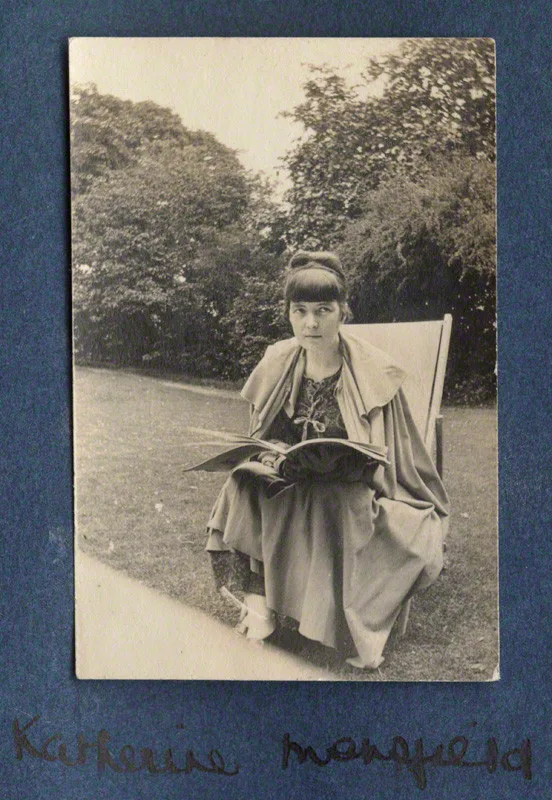
Bliss and Other Stories is a 1920 collection of fourteen stories by the New Zealand-born writer Katherine Mansfield. It opens with “Prelude”, in which the Burnell family leaves one Wellington house for another and the children, the grandmother, the husband and the two sisters each get their own small, private weather. It also holds “Bliss”, the dinner-party story of Bertha Young, who is thirty and suddenly overcome by happiness. Elsewhere a Parisian writer narrates a failed love affair in “Je ne parle pas français”, and “The Man Without a Temperament” tells of an ill wife and her long-suffering husband. The book is alive because so little happens on the surface and so much is going on underneath.
“Prelude” began in 1915 as a longer work called “The Aloe”. After Virginia Woolf encouraged Mansfield to finish it, the Hogarth Press published the shorter version in July 1918. “Bliss” appeared in the English Review the following month, and several other stories, including “Mr Reginald Peacock’s Day” and “A Dill Pickle”, had run in The New Age. Mansfield was diagnosed with pulmonary tuberculosis in December 1917 and wrote “Je ne parle pas français” in early 1918 at Bandol; the version printed in this book was cut. Wikipedia calls her an important figure in the modernist movement, and this was the collection that gathered her recent work.
Notice how often a story turns on a single small object or gesture: a pear tree seen from a window, an aloe in a garden, a duck that walks on briefly after it has been killed. Notice, too, how quickly the point of view slips from one mind into another. In “Prelude”, which is divided into twelve short sections and opens in the middle of the move, readers can easily miss that Linda is pregnant. Read slowly, and ask what each character most wants to believe about the day. Several stories deal with unhappy marriages, illness and disloyalty, and the Prelude scene with the duck is not for every reader.
Présentation rédigée pour LitMundi avec l’aide de l’IA et vérifiée d’après les sources ci-dessous.
La disponibilité des traductions reste à étudier. Un brouillon ne prouve pas l’absence d’une traduction.
← Retour à la collection