
The Importance of Being Earnest
English
The Importance of Being Earnest · English, Project Gutenberg #844
LeerOscar Wilde · 1895
Dos solteros londinenses inventan amigos y parientes ausentes para escapar de sus obligaciones, y las invenciones empiezan a cobrar sus deudas.
Jack Worthing es respetable en el campo y «Ernest» en la ciudad; su amigo Algernon mantiene a un enfermo llamado Bunbury con el mismo fin. Cuando los dos se enamoran, las dos vidas dobles chocan en una casa de campo, bajo la vigilancia de una tía temible. Oscar Wilde la llamó «una comedia trivial para gente seria»; se estrenó en Londres en febrero de 1895.
No hay una traducción publicada en el idioma de esta interfaz. Puedes leer el original u otra edición disponible.
Leer · English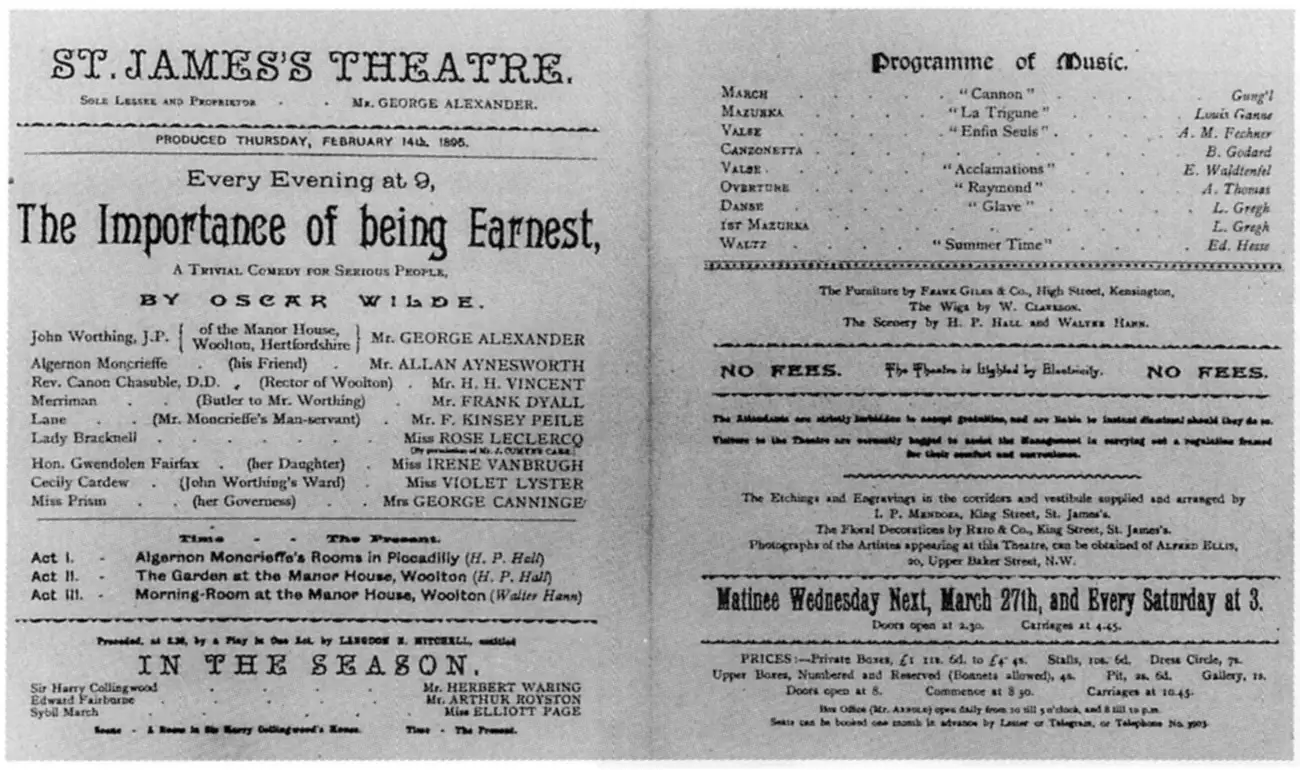
The Importance of Being Earnest is a farce in which nobody raises their voice and every line is built to be quoted. Two young men lie their way out of social duty, two young women are determined to marry a man named Ernest, and a formidable aunt interrogates everyone in the manner of a customs officer. It still reads as alive because its subject is not Victorian manners but the machinery of pretence: how a convenient fiction turns into a life you must maintain, and how sincerity gets used as a social weapon. The jokes survive because they are exact, not because they are topical, and a reader can enjoy them without knowing anything about 1895.
Wilde reversed the subtitle he first tried, “a Serious Comedy for Trivial People,” into “a Trivial Comedy for Serious People,” and told his friend Robbie Ross that the play treated trivial things seriously and serious things with “a sincere and studied triviality.” The first draft ran to four acts; at the actor-manager George Alexander’s request Wilde cut it to three, dropping, among other things, the solicitor Mr Gribsby and his writ for unpaid Savoy dinner bills. The three-act text is the one usually played. Its epigrammatic dialogue, delivered deadpan against an absurd plot, became the model for a whole tradition of English drawing-room comedy.
Listen to how the characters talk: each speaks in the same polished epigrams, which is the joke, since no one ever says anything that is not already a performance. Watch the names, Ernest above all, and what each character is willing to do to keep a pleasing story intact. Notice that Bunbury, who never appears, is the play’s most active character. The ending is a reversal in the old comic manner, handled with Wilde’s usual indifference to plausibility. It reads in an evening and is built for the stage, so reading it aloud, or with a cast, repays the effort.
Introducción redactada para LitMundi con ayuda de IA y contrastada con las fuentes que se indican abajo.
La disponibilidad de traducciones sigue en estudio. Un borrador no demuestra que no exista una traducción.
← Volver a la colección