
Много ли человеку земли нужно
Русский
Много ли человеку земли нужно · Русский, Собрание сочинений в 22 т., т. 10
LeerLeo Tolstoy · 1886
Un campesino ruso compra siempre más tierra, hasta que una oferta bashkir le pide recorrer a pie su parcela antes de la puesta del sol.
Pajom, un campesino, cree que con suficiente tierra no temería a nada, ni siquiera al diablo. Compra, se muda y vuelve a comprar, hasta que un trato con los bashkires en la estepa pone una jornada de camino entre él y todo lo que desea. Tolstói lo cuenta en unos pocos miles de palabras, con sencillez, como una fábula.
No hay una traducción publicada en el idioma de esta interfaz. Puedes leer el original u otra edición disponible.
Leer · Русский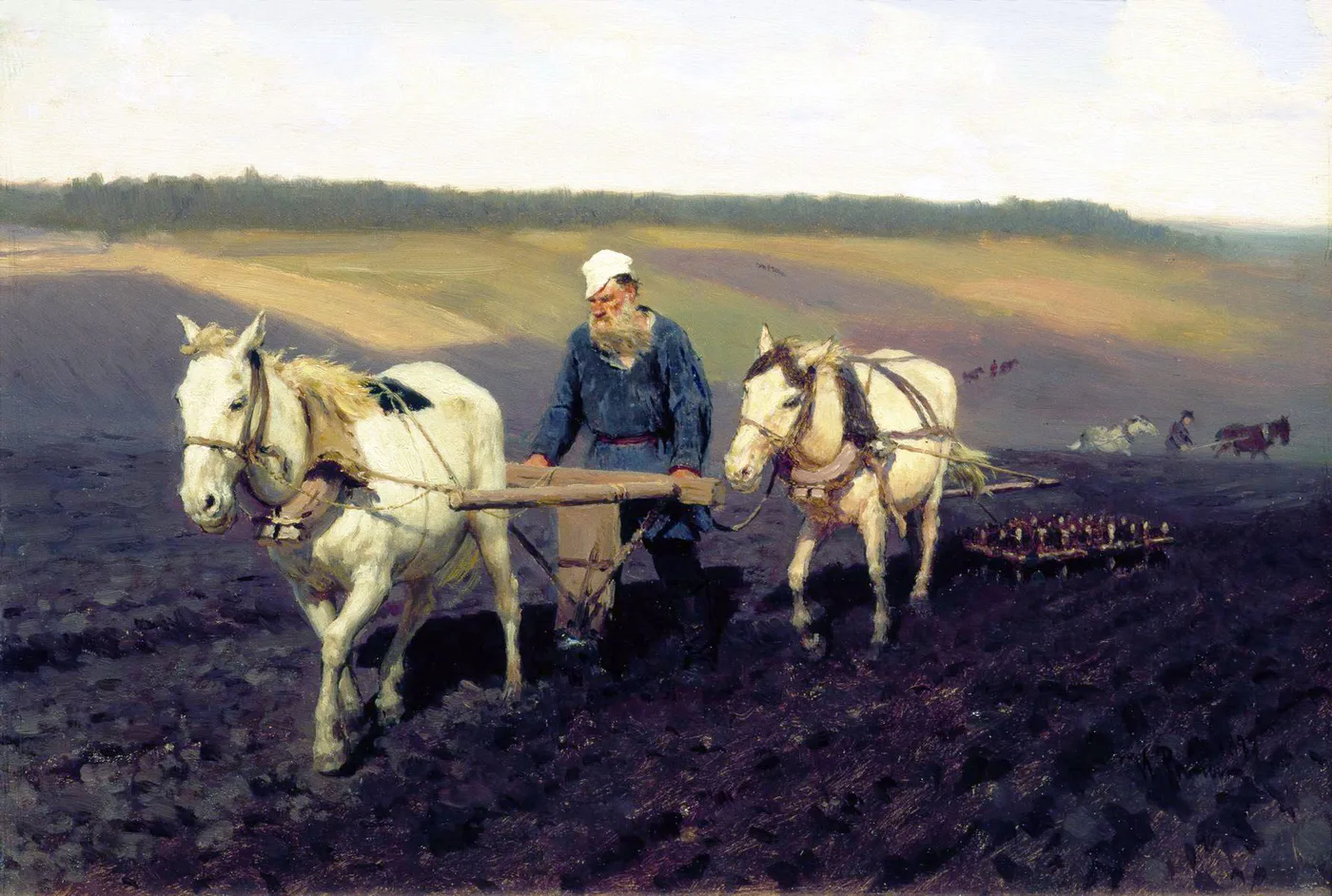
How Much Land Does a Man Need? is a short story that reads like a parable and behaves like a thriller. Its hero, the peasant Pahom, is not a villain; he wants a little more security, then a little more, and every step is reasonable until the total is not. The setting is rural Russia, with farms near Samara and a journey to the Bashkir lands, yet the appetite at its centre is easy to recognise in anyone who has priced a house, a promotion or a bigger plot. Tolstoy writes without ornament, in sentences close to speech, and that plainness is the point: the story never lectures, it keeps counting.
Tolstoy published it in 1886, a few years after the spiritual crisis he described in Confession (1882). James Joyce, according to Wikipedia, told his daughter Lucia it was the greatest story in world literature; Ludwig Wittgenstein is another well-known admirer. The story has travelled well: it became a 1969 West German film by Hans-Jürgen Syberberg, an episode of the 1986 Indian anthology series Katha Sagar, and a graphic novel by Martin Veyron, published by Dargaud in 2016. It shows how a fable can carry realistic detail, such as prices, journeys and neighbours, without losing its shape.
As you read, watch the devil. He is mentioned early in a boast and returns in a dream, and the story lets you decide how literally to take him. Notice how Pahom’s contentment never lasts longer than the first harvest, and how much of the plot is simply distances: what he can walk, what he can afford, what he can see. The ending is announced by the title and still lands; the story leaves its answer to the very last line, and its last measurement is the most exact. Readers of Vietnamese will find the question familiar from proverbs about greed; the story simply gives it a landscape.
Introducción redactada para LitMundi con ayuda de IA y contrastada con las fuentes que se indican abajo.
La disponibilidad de traducciones sigue en estudio. Un borrador no demuestra que no exista una traducción.
← Volver a la colección