
Goblin Market
English
Goblin Market · English, Project Gutenberg #16950
LeerChristina Rossetti · 1862
Dos hermanas viven junto a una hondonada donde unos duendes venden fruta deliciosa, y una paga con un mechón de su pelo.
«Goblin Market» es un poema narrativo de Christina Rossetti, publicado en 1862 en su primer libro editado comercialmente. Dos hermanas, Laura y Lizzie, oyen a unos duendes pregonar su fruta junto a la hondonada, y Laura compra un poco con un mechón de su pelo. Siguen el deseo, el desgaste y el rescate a cargo de la hermana. Se ha leído como fábula de la tentación, como estudio de las mujeres victorianas y el mercado, o simplemente como relato de devoción entre hermanas.
No hay una traducción publicada en el idioma de esta interfaz. Puedes leer el original u otra edición disponible.
Leer · English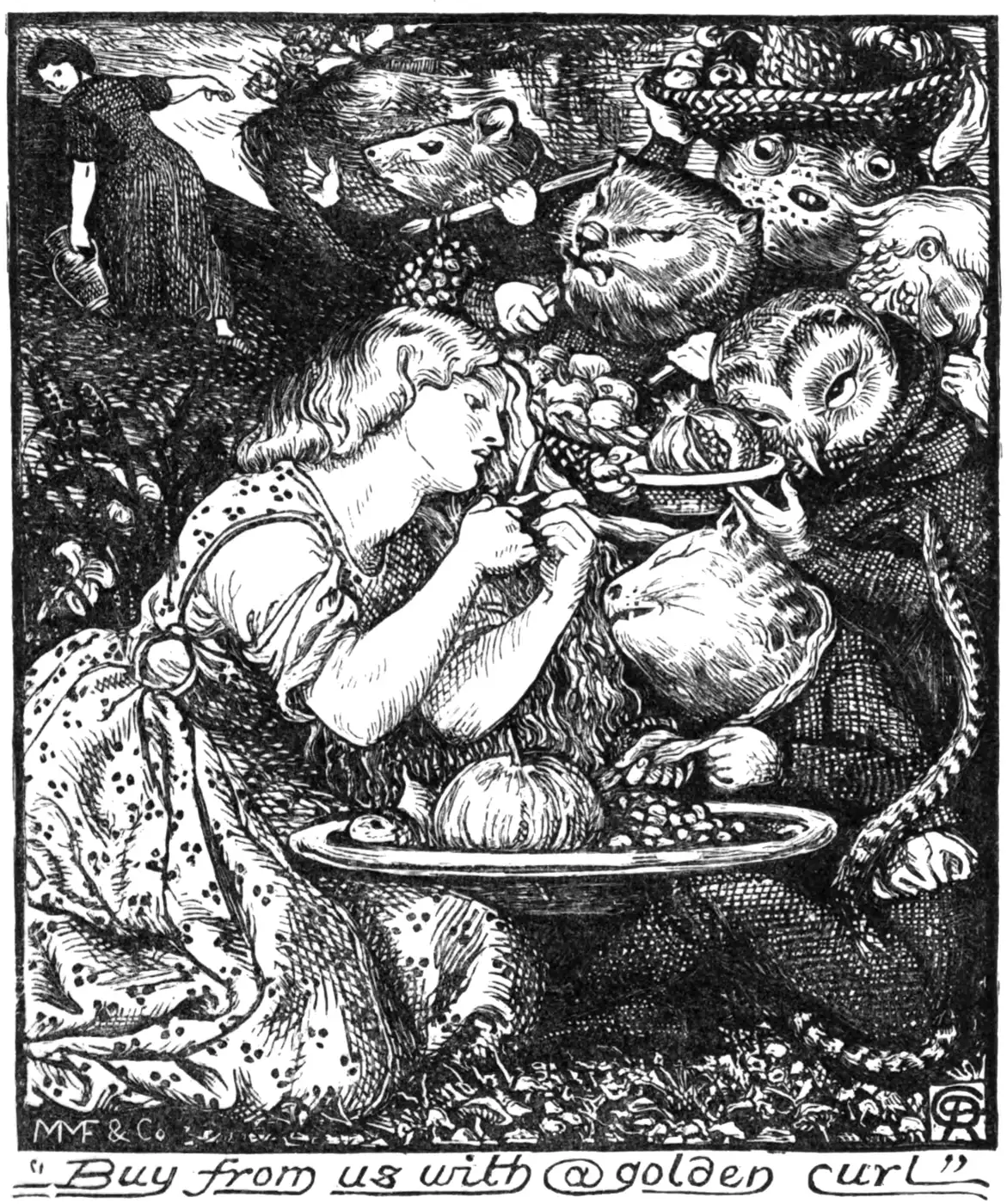
“Goblin Market” is a narrative poem of 567 lines, in the numbering of the Project Gutenberg text, by Christina Rossetti, published in 1862 in her collection Goblin Market and Other Poems. Two sisters, Laura and Lizzie, live alone and draw water from a stream each evening. Goblin merchants, who in the poem look like animals with cats’ and wombats’ faces and tails, call out their orchard fruit at twilight. Laura, short of money, pays with a lock of golden hair and a tear, then gorges on the fruit. After that she can no longer hear the goblins, and she wastes away for want of more. The poem moves fast and sounds like a nursery chant until it turns dark.
Wikipedia notes that the poem has been read in sharply different ways. Some critics see feminine sexuality and Victorian social codes, others a critique of the marriage market or of the new world of advertising; some see Adam and Eve, and in Lizzie’s “Eat me, drink me, love me” an echo of communion; others note a parallel with addiction. Rossetti herself told her publisher in a letter that it was not meant for children, though she often said in public that it was. Her volunteer work from 1859 at a Highgate refuge for women is sometimes linked to it. Her brother Dante Gabriel Rossetti designed the frontispiece and title page of the 1862 book, and Tennyson, Swinburne and Hopkins admired the poem.
Notice the sound: lines of three or four stresses, rhymes that repeat in runs or arrive many lines late, and the goblins’ sales cries that open the poem and keep returning. Notice what the goblins sell and what is sold to them, and how the ending turns a ruinous bargain into an act of generosity. Notice also that the poem refuses a single moral, however neatly its last stanza states one. Content note: a girl who craves a forbidden fruit and nearly dies of it; sensual images of eating and an assault by the goblins, framed as a fable and not graphic. This page uses the 1862 frontispiece. The English text is from Project Gutenberg.
Introducción redactada para LitMundi con ayuda de IA y contrastada con las fuentes que se indican abajo.
La disponibilidad de traducciones sigue en estudio. Un borrador no demuestra que no exista una traducción.
← Volver a la colección