
Капитанская дочка
Русский
Капитанская дочка · Russian, Wikisource transcription of the 1978 Nauka edition
LeerAlexander Pushkin · 1836
Un joven oficial ve caer su fuerte ante los rebeldes de Pugachov, cuyo jefe es un hombre al que una vez ayudó.
La hija del capitán, la única novela terminada de Aleksandr Pushkin, se publicó por primera vez en 1836 en la revista Sovremennik. Narrada por Piotr Griniov, un joven de 17 años destinado al fuerte de Belogorsk, cerca de Oremburgo, es un relato novelado de la rebelión de Pugachov de 1773–1774. Piotr se enamora de Masha, la hija del comandante, y queda atrapado entre su rival Shvabrin, el líder rebelde Pugachov y la justicia de la emperatriz.
No hay una traducción publicada en el idioma de esta interfaz. Puedes leer el original u otra edición disponible.
Leer · Русский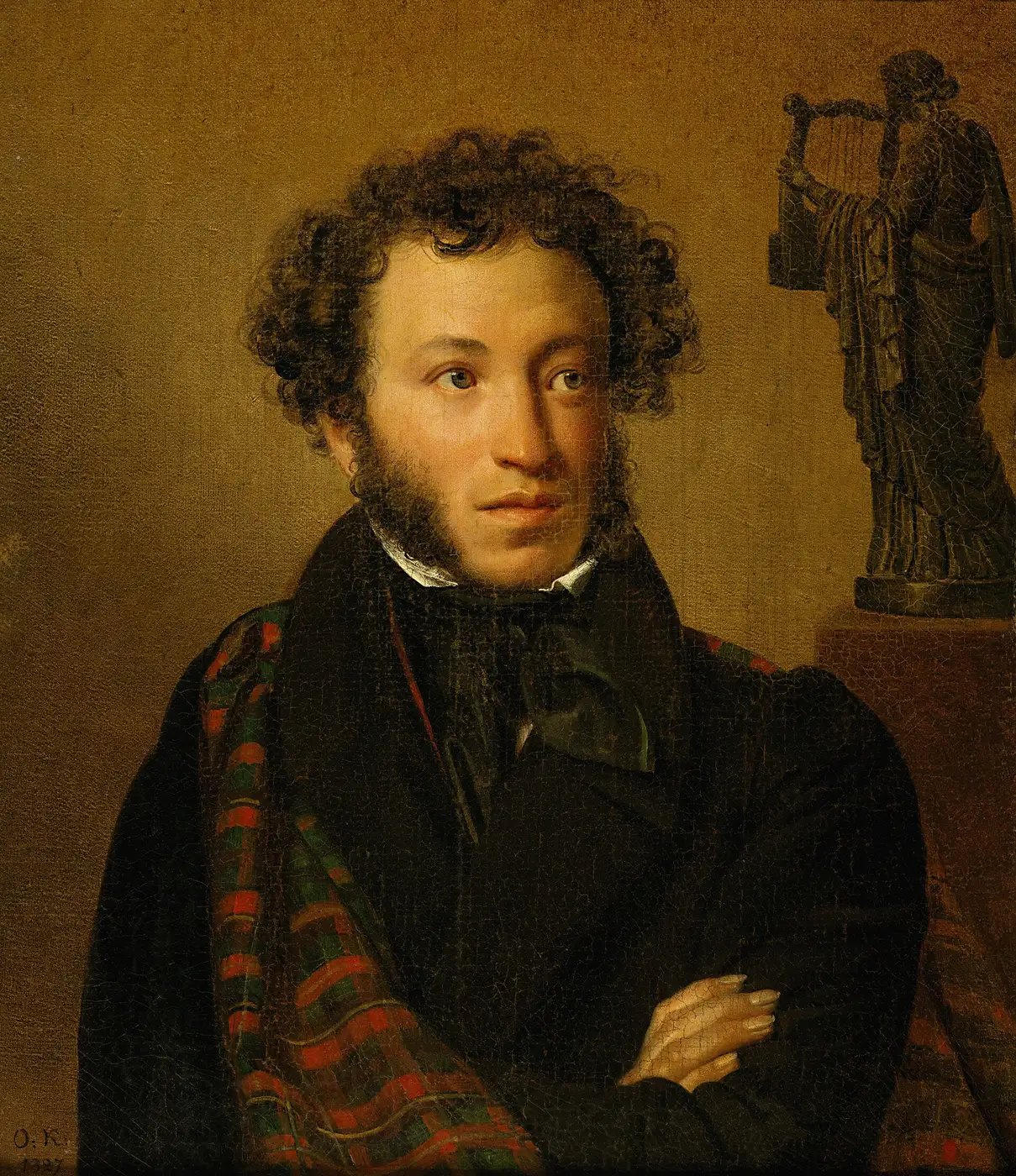
The Captain’s Daughter is Alexander Pushkin’s only completed novel. Wikipedia calls it a historical novel and a romanticized account of Pugachev’s Rebellion of 1773–1774; it appeared in the fourth issue of the journal Sovremennik in 1836, the magazine Pushkin founded that year. The narrator is Pyotr Grinyov, a 17-year-old officer sent to Orenburg. He gets lost in a blizzard, is guided out by a stranger and thanks him with a hareskin coat. Later the fort where he serves is taken by the rebel Yemelyan Pugachev, who claims to be Peter III, and the stranger turns out to be Pugachev himself.
Pushkin did not come to the subject cold. Wikipedia’s bibliography lists his A History of Pugachev, a study of the rebellion, dated 1833–34, alongside the novel dated 1833–36. The novel puts that history into the voice of one young man who is not a leader or a rebel, and whose story is full of small, human decisions: a coat given away, an oath refused, a petition carried to the Empress. Pushkin was fatally wounded in a duel in January 1837, less than a year after the novel appeared.
Notice who gets the best scenes. Pugachev is neither pure villain nor hero; he can hang a captain and also remember a kindness. Masha, the captain’s daughter of the title, acts on her own when she travels to Saint Petersburg to petition the Empress. Notice that everything is seen through Pyotr’s eyes, so Pugachev appears only as Pyotr meets him. Content note: the story includes hangings and the killing of the commandant and his wife when the fort falls, a siege, a duel and a forced-marriage threat; nothing is graphic. This page uses Kiprensky’s 1827 portrait of Pushkin, not an illustration of the novel. The Russian text on this site is from Russian Wikisource.
Introducción redactada para LitMundi con ayuda de IA y contrastada con las fuentes que se indican abajo.
La disponibilidad de traducciones sigue en estudio. Un borrador no demuestra que no exista una traducción.
← Volver a la colección