
Et dukkehjem
Norsk
Et dukkehjem · Norwegian (Dano-Norwegian), Wikisource transcription
LeerHenrik Ibsen · 1879
Una esposa que hace de muñeca en un hogar respetable se enfrenta a una firma falsificada, un chantajista y una puerta.
Casa de muñecas (Et dukkehjem, 1879) es una obra en tres actos de Henrik Ibsen sobre Nora Helmer, esposa y madre que ha pedido dinero en secreto falsificando la firma de su padre. Cuando un empleado del banco amenaza con delatarla, el matrimonio que creía seguro se pone a prueba. Escrita en dano-noruego, provocó lo que la Wikipedia en inglés llama una tormenta de polémica indignada y se convirtió en una de las obras más representadas del mundo.
No hay una traducción publicada en el idioma de esta interfaz. Puedes leer el original u otra edición disponible.
Leer · Norsk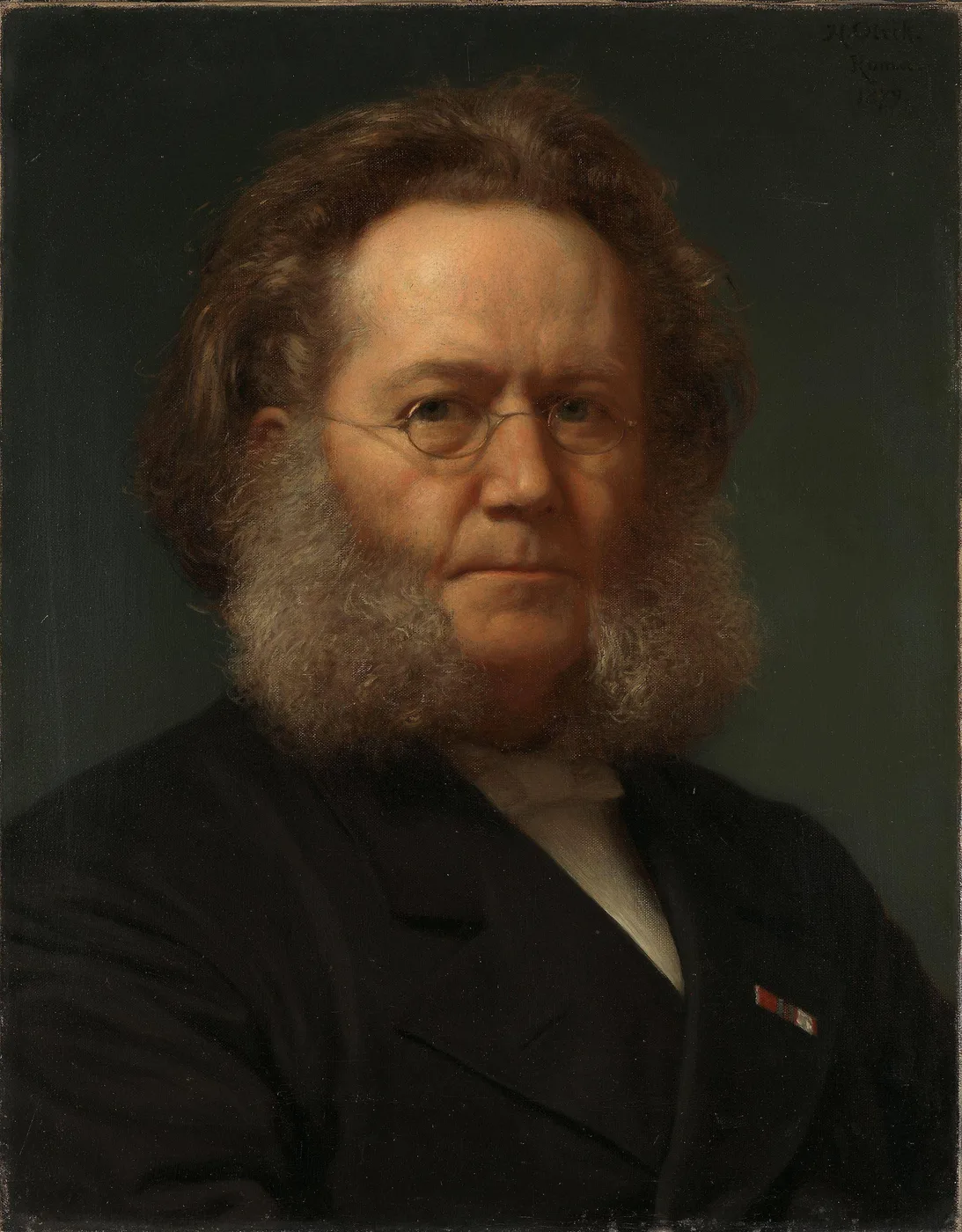
A Doll’s House (Et dukkehjem) is a three-act play by the Norwegian playwright Henrik Ibsen, published in Copenhagen in December 1879 in an edition of 8,000 copies that, Wikipedia reports, sold out within a month. Its heroine is Nora Helmer, wife of Torvald, a newly promoted bank manager, and mother of three. She lives out the ideal of the nineteenth-century wife and is called his “little squirrel”. Beneath the Christmas bustle lies a loan she obtained by forging her father’s signature, and a bank clerk who threatens to expose her. The play stays alive because that family room is a place where power and love are hard to tell apart; according to Wikipedia, it was the world’s most-performed play in 2006.
What made the play a sensation was putting an ordinary marriage on stage as a case to be judged. In a note written in Rome on 19 October 1878, Ibsen called it a “modern tragedy” and wrote that a woman cannot be herself in an exclusively male society, with laws made by men. Wikipedia says the plot drew on the life of his friend Laura Kieler. In Germany the actress Hedwig Raabe refused to play it as written, and Ibsen wrote an alternative ending himself, in which Nora stays, later calling it a disgrace to the play. Nora’s slammed door became an emblem of the whole work, and in 1923 Lu Xun gave a speech on what happens after Nora leaves home.
As you read, notice how Ibsen compresses everything into one drawing room around Christmas: three acts, a handful of characters, a letter lying in a locked letter box. In an 1898 speech to the Norwegian Association for Women’s Rights, which Wikipedia cites, Ibsen disclaimed any conscious work for the women’s rights movement and said he had described humanity. Michael Meyer reads the theme as each person’s need to find out who they really are; Strindberg objected to Nora leaving her children. Content note: a wife condescended to and threatened with blackmail, a forged signature, implied heartbreak, a mother leaving her children; nothing graphic. The Vietnamese text on this site is the site’s own translation, based on the Norwegian Wikisource text.
Introducción redactada para LitMundi con ayuda de IA y contrastada con las fuentes que se indican abajo.
La disponibilidad de traducciones sigue en estudio. Un borrador no demuestra que no exista una traducción.
← Volver a la colección