
Jane Eyre
English
Jane Eyre · English, Project Gutenberg #1260
LeerCharlotte Brontë · 1847
Una institutriz cuenta su vida, de una infancia sin afecto en Gateshead a Thornfield y el señor Rochester: novela de Charlotte Brontë, 1847.
Jane Eyre es una novela de Charlotte Brontë, publicada con el seudónimo «Currer Bell» el 19 de octubre de 1847 por Smith, Elder & Co. de Londres. Jane la narra en primera persona, desde su infancia infeliz en Gateshead Hall y sus años en Lowood, hasta su trabajo como institutriz en Thornfield Hall. El texto que usa este sitio es el Project Gutenberg #1260, la novela completa en 38 capítulos, impresa a partir de una edición de Service & Paton de 1897 con ilustraciones de F. H. Townsend.
No hay una traducción publicada en el idioma de esta interfaz. Puedes leer el original u otra edición disponible.
Leer · English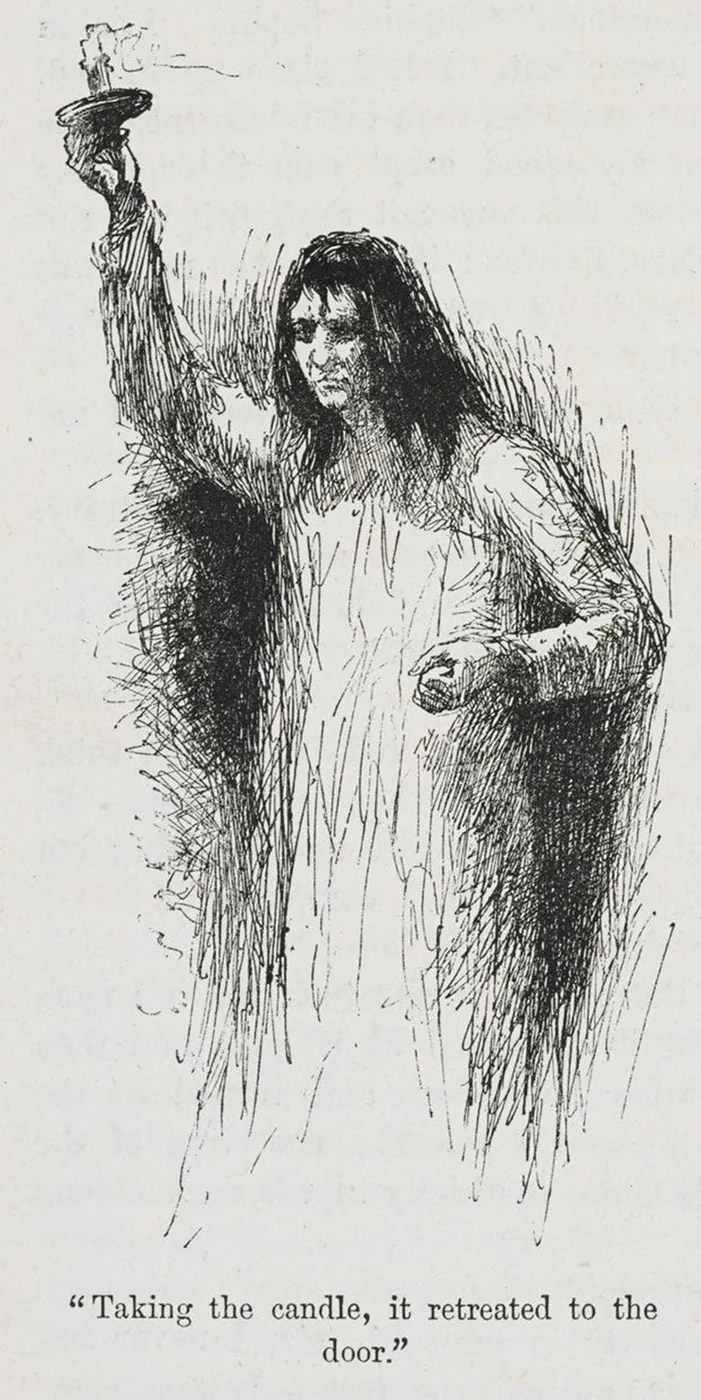
Jane Eyre is a first-person account by a plain, poor young woman who works as a governess and falls in love with her employer, Mr Rochester. Wikipedia calls it a bildungsroman, a novel of growing up, and the story follows Jane from a cruel childhood at Gateshead through the strict school at Lowood to Thornfield. Its best-known line, “Reader, I married him”, comes near the end, after a long run of hard choices. The book is still alive because Jane keeps asking what she owes to others and what she owes to herself.
Wikipedia describes the novel as the first to focus on the moral and spiritual development of its protagonist through an intimate first-person narrative, with events coloured by psychological intensity. The critic Daniel S. Burt calls Brontë “the first historian of the private consciousness”. The book also takes up class, religion, sexuality and feminism, and it was published under the pseudonym Currer Bell, with the first American edition following in January 1848. Wikipedia counts it among the greatest novels in the English language, and the BBC’s 2003 Big Read poll ranked it tenth best-loved book in Britain.
Notice the place names, which mark the five stages of Jane’s life: Gateshead, Lowood, Thornfield, Moor House and Ferndean. At Moor House her cousin St John Rivers proposes marriage, and she has to weigh his cold sense of duty against her love for Mr Rochester. Before the story, the second-edition preface thanks the public, the press and the publishers, then answers readers who doubt the tendency of such books. The book is dedicated to W. M. Thackeray. Read the first-person voice closely, because Jane often judges herself as sharply as she judges the people around her.
Introducción redactada para LitMundi con ayuda de IA y contrastada con las fuentes que se indican abajo.
La disponibilidad de traducciones sigue en estudio. Un borrador no demuestra que no exista una traducción.
← Volver a la colección