
おくのほそ道
日本語
おくのほそ道 · 日本語, 三宅邦吉『新釈奥の細道』1911(ウィキソース)
LeerMatsuo Bashō · 1702
Un maestro del haiku camina hacia el norte desde Edo en 1689, unos 2 400 km a pie, y escribe el viaje en una prosa que no deja de quebrarse en poemas.
En la primavera de 1689, Matsuo Bashō salió de Edo con su compañero Sora hacia el extremo norte de Honshū, y más tarde hizo del viaje un breve libro de prosa y haikus. Es un diario de viaje que se lee como una meditación sobre el tiempo, los lugares y la gente que pasó por ellos antes que él.
No hay una traducción publicada en el idioma de esta interfaz. Puedes leer el original u otra edición disponible.
Leer · 日本語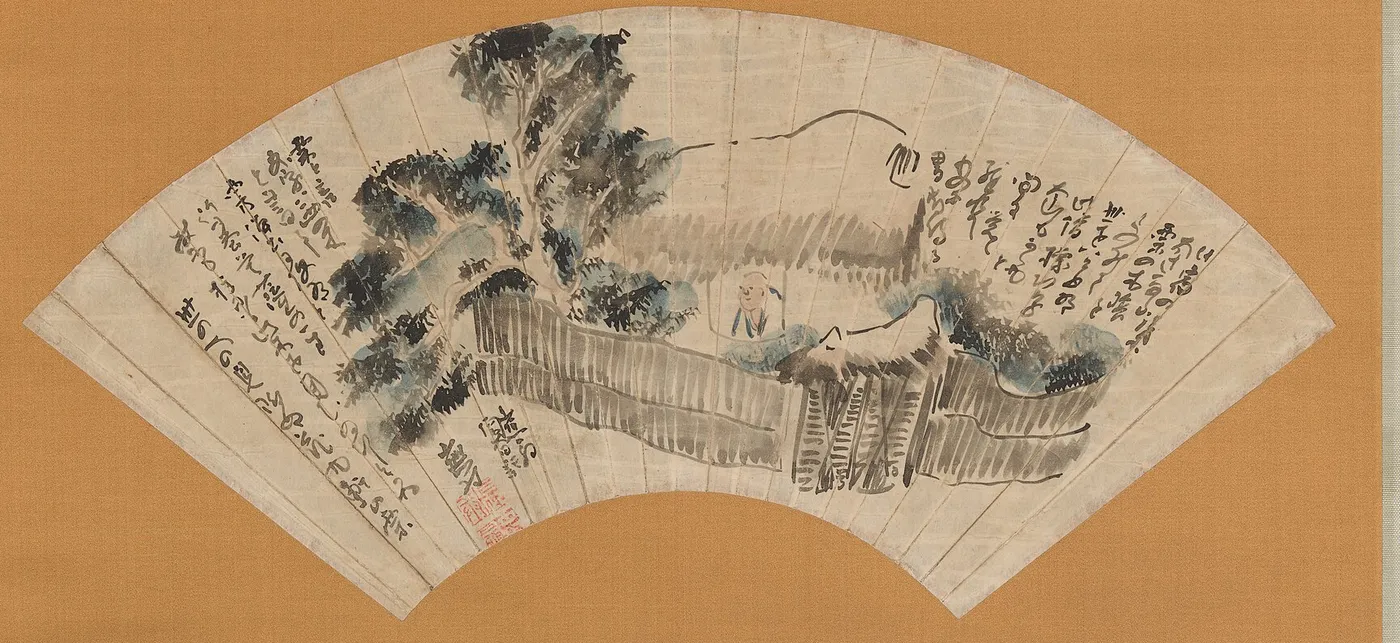
Oku no Hosomichi, usually rendered in English as The Narrow Road to the Deep North, records a journey Matsuo Bashō began in spring 1689, leaving Edo (modern Tokyo) with his companion Kawai Sora for the northern interior. They covered about 2,400 kilometres, mostly on foot. The result is a haibun, a form that mixes prose and haiku, and it opens with a sentence Donald Keene translates as “The months and days are the travellers of eternity.” It is short, and it still reads like walking: a place, a few plain lines of prose, a poem, and then the road again.
It is not a diary. Bashō spent about five years reworking the text after he came home, and comparing it with Sora’s own diary shows that he took artistic liberties; he describes, for example, a night at an inn with prostitutes that Sora’s diary does not mention. The book was first published in 1702, eight years after his death in 1694. Its models were Chinese and Japanese: he revered Du Fu and called Saigyō the greatest waka poet, and he echoes The Tale of the Heike. Later artists answered it in pictures too. Yosa Buson, who admired Bashō and travelled in northern Honshū himself, painted scenes from it.
Notice how the prose prepares the poem. Many entries are a few lines of setting that leave a gap, and the haiku sits in that gap instead of explaining it. Notice what is left out as well, since Bashō edited his own journey. The opening hut poem, “Even a thatched hut / may change with a new owner / into a doll’s house”, shows the tone: he is leaving a home for the road. Vietnamese readers will recognise Đỗ Phủ (Du Fu), whom Bashō revered, as a common ancestor in the classical Chinese poetry that Vietnamese literature also grew up with.
Introducción redactada para LitMundi con ayuda de IA y contrastada con las fuentes que se indican abajo.
La disponibilidad de traducciones sigue en estudio. Un borrador no demuestra que no exista una traducción.
← Volver a la colección