
কাবুলিওয়ালা
বাংলা
কাবুলিওয়ালা · বাংলা, গল্পগুচ্ছ প্রথম খণ্ড (বিশ্বভারতী)
LireRabindranath Tagore · 1892
Chaque année, un marchand de fruits secs de Kaboul entre dans une ruelle de Calcutta et s’arrête devant la maison d’une fillette de cinq ans.
Rahmat, marchand de fruits secs pachtoune venu de Kaboul, se lie d’amitié avec Mini, la fille de cinq ans d’un écrivain de Calcutta qui raconte l’histoire. Leur amitié s’étend sur des années, et sur bien des choses que le narrateur juge mal. Tagore reste petit et exact, et l’émotion arrive sans être annoncée.
Aucune traduction publiée dans la langue de cette interface. Vous pouvez lire l’original ou une autre édition disponible.
Lire · বাংলা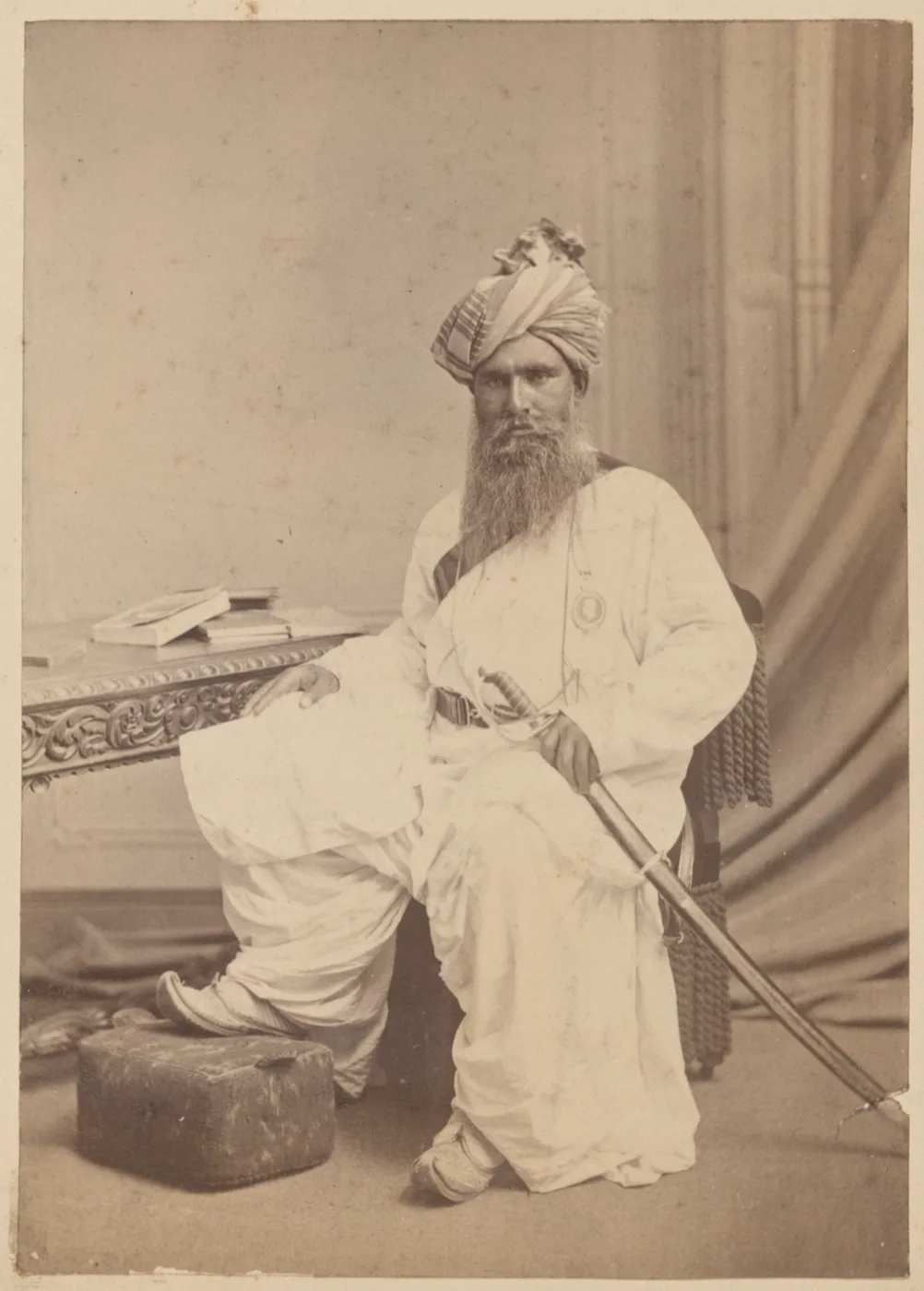
Kabuliwala is a short story about a friendship across an unlikely gap: a Pashtun dry-fruit seller who walks to Calcutta every year, and a five-year-old girl who will not stop talking. The narrator is Mini’s father, a writer who watches with amusement and some suspicion, and the story is partly about what he fails to see. It is short and warm, and it avoids the sentiment it seems to be heading for. What keeps it alive is that Tagore treats a stranger’s love for a child as an ordinary human fact, rather than a lesson about otherness. The Wikipedia summary reads the theme as people being alike whatever their nationality.
Tagore published the story in 1892, in his magazine Sadhana, during the most productive stretch of his short-story writing. Wikipedia credits him with effectively inventing the Bengali short story, and says he wrote more than half the stories of the three-volume Galpaguchchha in the years 1891 to 1895, while managing family estates around Shelaidaha, where he met ordinary rural lives. Kabuliwala has been filmed many times, including a 1957 Bengali film and a 1961 Hindi film, and later Bengali versions in 2006 and 2023; Bioscopewala, a Hindi film, adapts it more loosely. The story has also been staged and translated into English by several hands, including William Radice in 1991.
While reading, watch how the story handles time. A few scenes sit years apart, and the gaps do the emotional work; the last scene turns on what has changed and what has not. Notice, too, the narrator’s early habit of imagining dangers about the visitor, which sets up his own correction. Tagore was awarded the 1913 Nobel Prize in Literature, the first non-European to receive it, for his poetry, especially Gitanjali; the stories show a different side of him, close, domestic and observant. For readers in Vietnam, the story offers a rare picture of a trader’s life far from home, written with sympathy.
Présentation rédigée pour LitMundi avec l’aide de l’IA et vérifiée d’après les sources ci-dessous.
La disponibilité des traductions reste à étudier. Un brouillon ne prouve pas l’absence d’une traduction.
← Retour à la collection