
কাবুলিওয়ালা
বাংলা
কাবুলিওয়ালা · বাংলা, গল্পগুচ্ছ প্রথম খণ্ড (বিশ্বভারতী)
LeerRabindranath Tagore · 1892
Cada año, un vendedor de frutos secos de Kabul entra en un callejón de Calcuta y se detiene ante la casa de una niña de cinco años.
Rahmat, un vendedor pastún de frutos secos de Kabul, hace amistad con Mini, la hija de cinco años de un escritor de Calcuta que cuenta la historia. Su amistad atraviesa los años, y buena parte de lo que el narrador juzga mal. Tagore lo mantiene pequeño y exacto, y la emoción llega sin anunciarse.
No hay una traducción publicada en el idioma de esta interfaz. Puedes leer el original u otra edición disponible.
Leer · বাংলা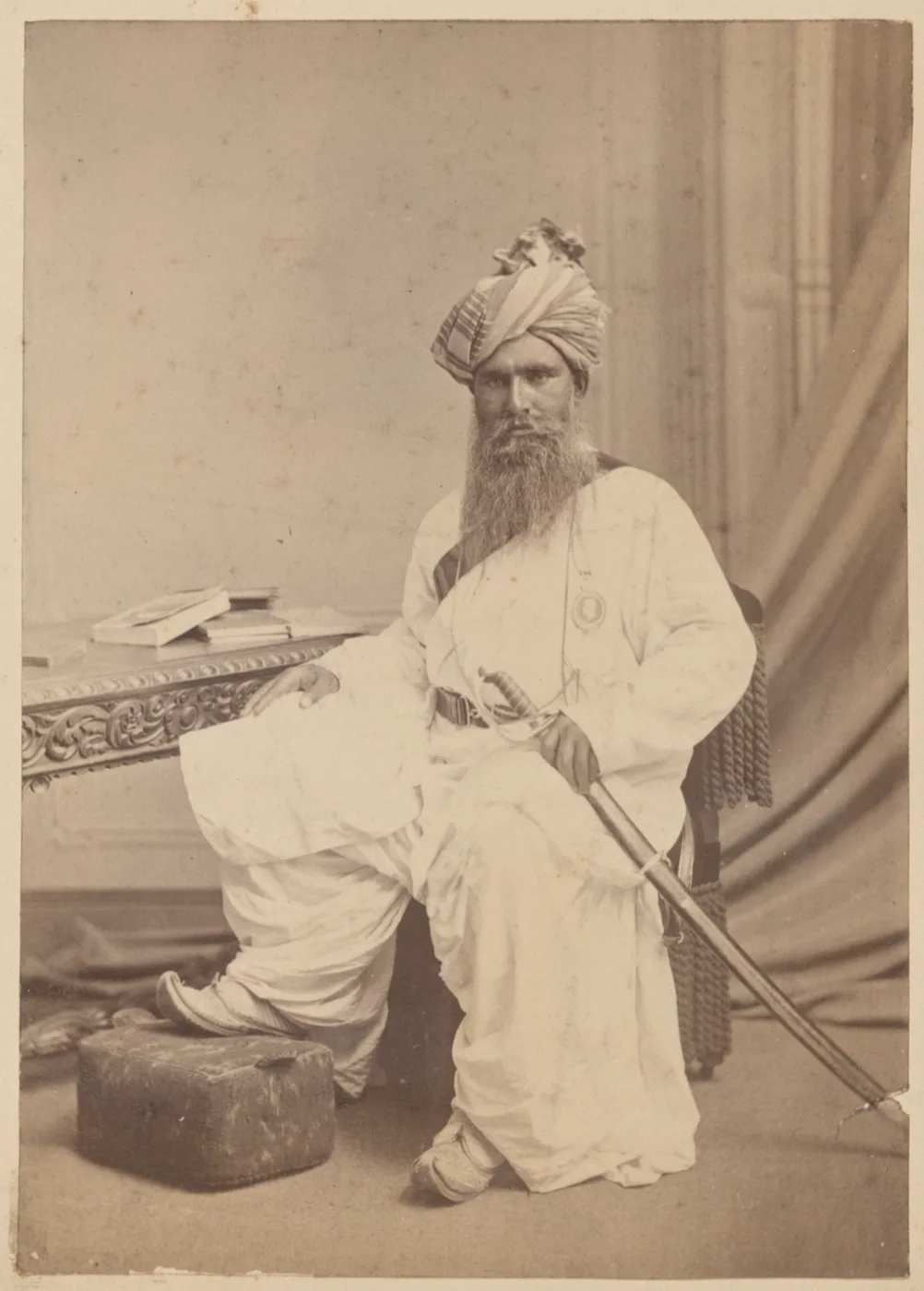
Kabuliwala is a short story about a friendship across an unlikely gap: a Pashtun dry-fruit seller who walks to Calcutta every year, and a five-year-old girl who will not stop talking. The narrator is Mini’s father, a writer who watches with amusement and some suspicion, and the story is partly about what he fails to see. It is short and warm, and it avoids the sentiment it seems to be heading for. What keeps it alive is that Tagore treats a stranger’s love for a child as an ordinary human fact, rather than a lesson about otherness. The Wikipedia summary reads the theme as people being alike whatever their nationality.
Tagore published the story in 1892, in his magazine Sadhana, during the most productive stretch of his short-story writing. Wikipedia credits him with effectively inventing the Bengali short story, and says he wrote more than half the stories of the three-volume Galpaguchchha in the years 1891 to 1895, while managing family estates around Shelaidaha, where he met ordinary rural lives. Kabuliwala has been filmed many times, including a 1957 Bengali film and a 1961 Hindi film, and later Bengali versions in 2006 and 2023; Bioscopewala, a Hindi film, adapts it more loosely. The story has also been staged and translated into English by several hands, including William Radice in 1991.
While reading, watch how the story handles time. A few scenes sit years apart, and the gaps do the emotional work; the last scene turns on what has changed and what has not. Notice, too, the narrator’s early habit of imagining dangers about the visitor, which sets up his own correction. Tagore was awarded the 1913 Nobel Prize in Literature, the first non-European to receive it, for his poetry, especially Gitanjali; the stories show a different side of him, close, domestic and observant. For readers in Vietnam, the story offers a rare picture of a trader’s life far from home, written with sympathy.
Introducción redactada para LitMundi con ayuda de IA y contrastada con las fuentes que se indican abajo.
La disponibilidad de traducciones sigue en estudio. Un borrador no demuestra que no exista una traducción.
← Volver a la colección