
The Yellow Wallpaper
English
The Yellow Wallpaper · English, Project Gutenberg #1952
LireCharlotte Perkins Gilman · 1892
On lui a ordonné le repos et interdit d’écrire ; dans une maison d’été louée, une femme se met à étudier le papier peint.
Un médecin loue une maison d’été et enferme sa femme dans la chambre d’enfants, à l’étage, lui interdisant de travailler et d’écrire. Elle tient en secret un journal, et son attention se fixe sur le papier peint jaune de la pièce. Le récit de Gilman est bref, domestique et de plus en plus troublant.
Aucune traduction publiée dans la langue de cette interface. Vous pouvez lire l’original ou une autre édition disponible.
Lire · English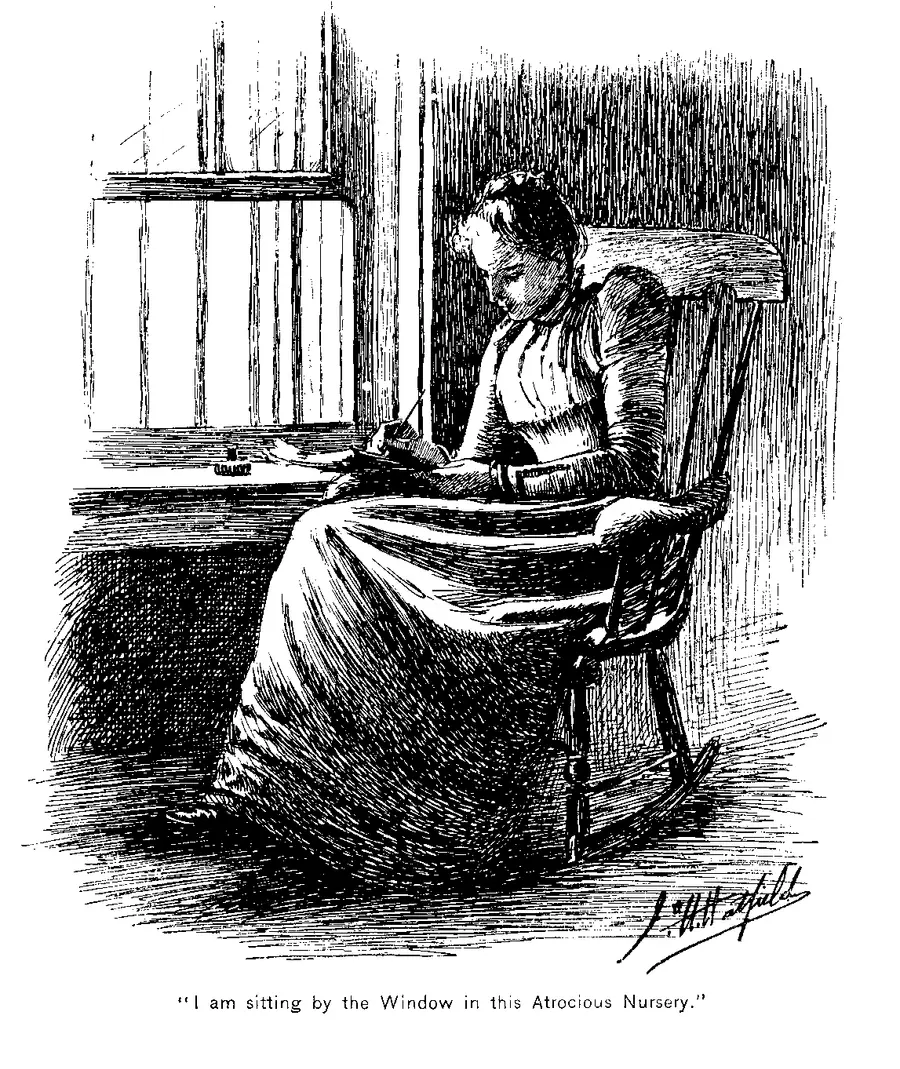
The Yellow Wallpaper is a short story told as secret journal entries by a woman whose physician husband has taken a house for the summer and shut her in an upstairs nursery for her health. She is forbidden to work or write; she writes anyway, in fragments she hides. The horror is domestic: a kind husband, a pleasant room, a diagnosis, and a pattern on the wall that she starts to read. It still reads as alive because the voice is lucid and then less so, and the reader watches it change page by page. It works as a ghost story, a medical critique and a study of what happens when a person is denied any occupation of her own.
Gilman published it in January 1892 in The New England Magazine under the title The Yellow Wall-paper. A Story. It was drawn from her own experience: after postnatal depression she was treated with the rest cure promoted by Dr. Silas Weir Mitchell, which banned intellectual work, and she said it nearly broke her. In The Forerunner in 1913 she wrote that the story was meant to save people from being driven mad, and that she had sent Mitchell a copy and heard nothing. Wikipedia notes that it is regarded as an early work of American feminist literature and is also praised as horror fiction; H. P. Lovecraft admired it. It became a standard text in many curricula as feminist criticism grew.
While reading, watch the narrator’s relation to her own writing: she records what she is not supposed to do, and she is aware of being watched as she does it. Watch the husband’s tone, always affectionate and always final, and how the descriptions of the paper shift from complaint to close study. The prose rewards a slow second reading, when the early lines show how much she already knows. Gilman went on to write the nonfiction Women and Economics (1898) and the utopian novel Herland (1915); this story is her most compressed argument. Content note: mental illness, confinement and a disturbing, ambiguous ending.
Présentation rédigée pour LitMundi avec l’aide de l’IA et vérifiée d’après les sources ci-dessous.
La disponibilité des traductions reste à étudier. Un brouillon ne prouve pas l’absence d’une traduction.
← Retour à la collection