
L’Avare
Français
L’Avare · French, Wikisource transcription of the Louandre 1910 edition
LeerMolière · 1669
Un viudo rico y mayor ama su cofre enterrado más que a sus hijos y quiere casarse con la novia de su hijo.
El avaro (L’Avare) es una comedia en cinco actos y en prosa de Molière, estrenada en 1668. Harpagón, un viudo rico, quiere casarse con la joven Mariana, que ama a su hijo Cleanto, y casar a su hija Elisa con un anciano que no pide dote. Cuando desaparece el cofre que enterró en el jardín, sospecha de todos. La obra termina con una serie de revelaciones sobre parientes perdidos hace mucho.
No hay una traducción publicada en el idioma de esta interfaz. Puedes leer el original u otra edición disponible.
Leer · Français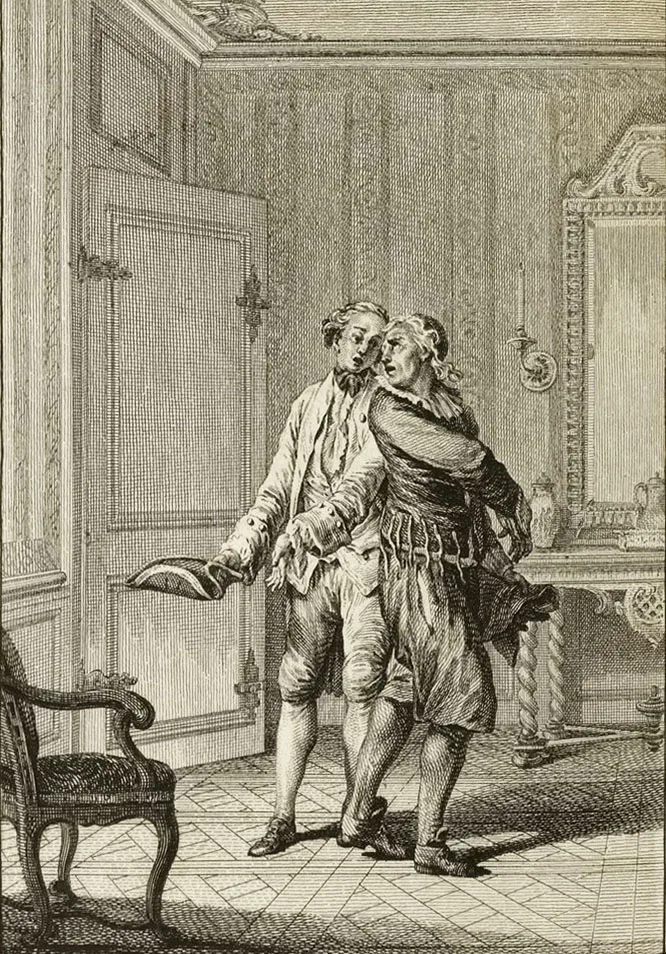
The Miser is a five-act comedy in prose, first performed on 9 September 1668 at the Palais-Royal theatre in Paris. Its hero, Harpagon, is an elderly widower who lends money at ruinous rates and pinches every penny at home, yet loves nothing as much as the cash box he has buried in his garden. He means to marry the young Mariane, who is already devoted to his son Cléante, and to give his daughter Élise to a rich old man who will take her without a dowry. According to Wikipedia, his name is adapted from a Greek word for a hook or grappling iron. The comedy comes from a single fear, losing the money, that outranks every other feeling in the house.
Molière built the play from older material and made it his own. Wikipedia says it is loosely based on Plautus’s Latin comedy Aulularia, which supplies the miser’s anguish over his lost gold, and on Italian farces; it also credits a 1665 comedy, La Mère coquette, with the father and son in love with the same young woman. The start was slow: after a few performances the play vanished on 7 October, then did well at the King’s festivities at Saint-Germain-en-Laye in November. By French Wikipedia’s count it reached 155 performances at the Comédie-Française between 1680 and 1700, third among Molière’s comedies after Tartuffe and The Misanthrope. Translations and adaptations followed in German, English, Serbian and Arabic.
Notice how often Harpagon turns to the audience, and how the other characters insist on knowing whom he is talking to. Notice the loan scene in the second act, where Cléante discovers that the lender he has been bargaining with is his own father, and the fifth act, where a confession of love is taken for a confession of theft. The ending is tidy, with a long-lost family and a paid-for wedding, and Harpagon cares most about his box. Content note: a tyrannical father, forced-marriage plans, a threatened disinheritance and a servant beaten with a stick; all comic, nothing graphic. This page uses an eighteenth-century engraving. The French text is from French Wikisource.
Introducción redactada para LitMundi con ayuda de IA y contrastada con las fuentes que se indican abajo.
La disponibilidad de traducciones sigue en estudio. Un borrador no demuestra que no exista una traducción.
← Volver a la colección