
Silas Marner
English
Silas Marner · English, Project Gutenberg #550
LeerGeorge Eliot · 1861
Un tejedor expulsado de su capilla acumula oro en una casita de las Midlands, hasta que el oro desaparece y llega algo distinto.
Silas Marner, un tejedor de lino acusado en falso en su capilla del norte, se instala en la aldea de Raveloe y se cierra a todos salvo a su telar y a sus monedas. La breve novela de George Eliot (1861) sigue lo que una aldea, una familia de terratenientes con un secreto y una noche de invierno hacen con esa soledad.
No hay una traducción publicada en el idioma de esta interfaz. Puedes leer el original u otra edición disponible.
Leer · English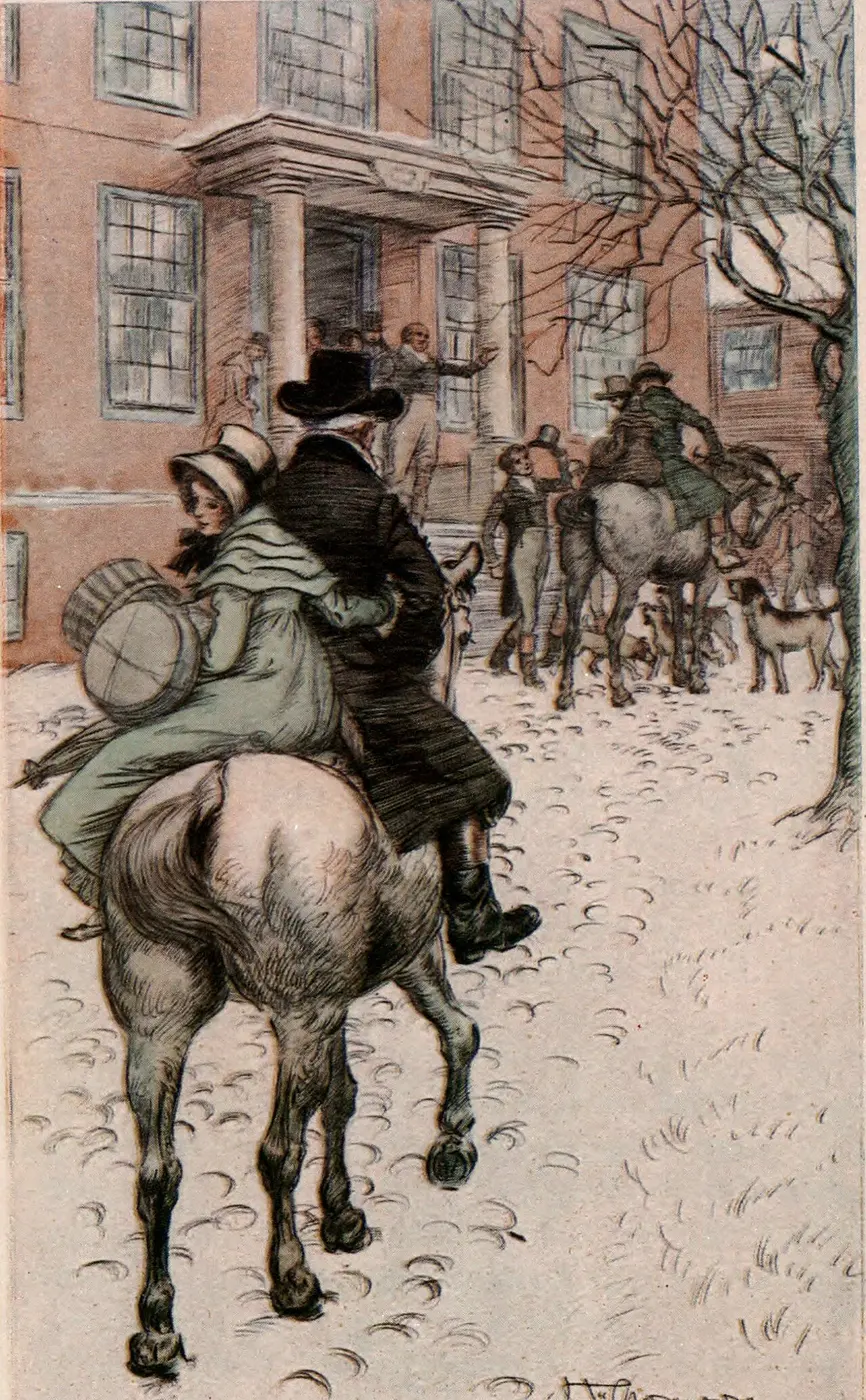
Silas Marner is George Eliot’s third novel, published on 2 April 1861, and its premise reads like a folktale: a lonely weaver, a hoard of gold, a loss, a child. Eliot sets it in realist detail in the early nineteenth century, with the Lantern Yard congregation, the loom, the talk at the Rainbow Inn in Raveloe, so the fable has to survive contact with money, class and village opinion. It reads as alive because its question is plain: what does a person need in order to belong to a community, and what becomes of someone who has been shut out of one?
Critics have read it as realism carrying myth and legend, as a study of alienation, and through the ideas of Wordsworth. Its double plot sets Silas beside the squire’s son Godfrey Cass, whose secret life one critic calls “both parallel and foil” to Silas’s. The central situation, a child arriving in a miser’s life, was borrowed openly by W. S. Gilbert for his play Dan’l Druce, Blacksmith (1876). The novel travelled: Premchand wrote a Hindi adaptation called Sukhdas, a 1954 Telugu film, Bangaru Papa, is loosely based on it, and Steve Martin’s 1994 film A Simple Twist of Fate retells it.
While reading, listen to the village. Eliot gives the Raveloe gossips their own comedy and their own kindness, and the neighbour Dolly Winthrop’s practical help counts for as much as any sermon. Compare the cold, careful order of Silas’s cottage with the loose, money-troubled household of the Casses, and notice how the book treats chance, luck and responsibility as different things. The picture here is a coloured plate by Hugh Thomson from Macmillan’s 1907 edition: Nancy Lammeter arriving at the Red House, as chapter 11 describes.
Introducción redactada para LitMundi con ayuda de IA y contrastada con las fuentes que se indican abajo.
La disponibilidad de traducciones sigue en estudio. Un borrador no demuestra que no exista una traducción.
← Volver a la colección