
The Awakening
English
The Awakening · English, Project Gutenberg #160
LeerKate Chopin · 1899
Un verano en Grand Isle, una esposa y madre de Nueva Orleans empieza a desear una vida que sea suya.
Edna Pontellier, esposa de un hombre de negocios de Nueva Orleans, pasa un verano con su familia en un balneario de Grand Isle, en el golfo de México. Una amistad, una pieza de piano y el mar la llevan a cuestionar los papeles de esposa y madre que todos a su alrededor dan por sentados. Herbert S. Stone & Company lo publicó en Chicago y Nueva York en 1899.
No hay una traducción publicada en el idioma de esta interfaz. Puedes leer el original u otra edición disponible.
Leer · English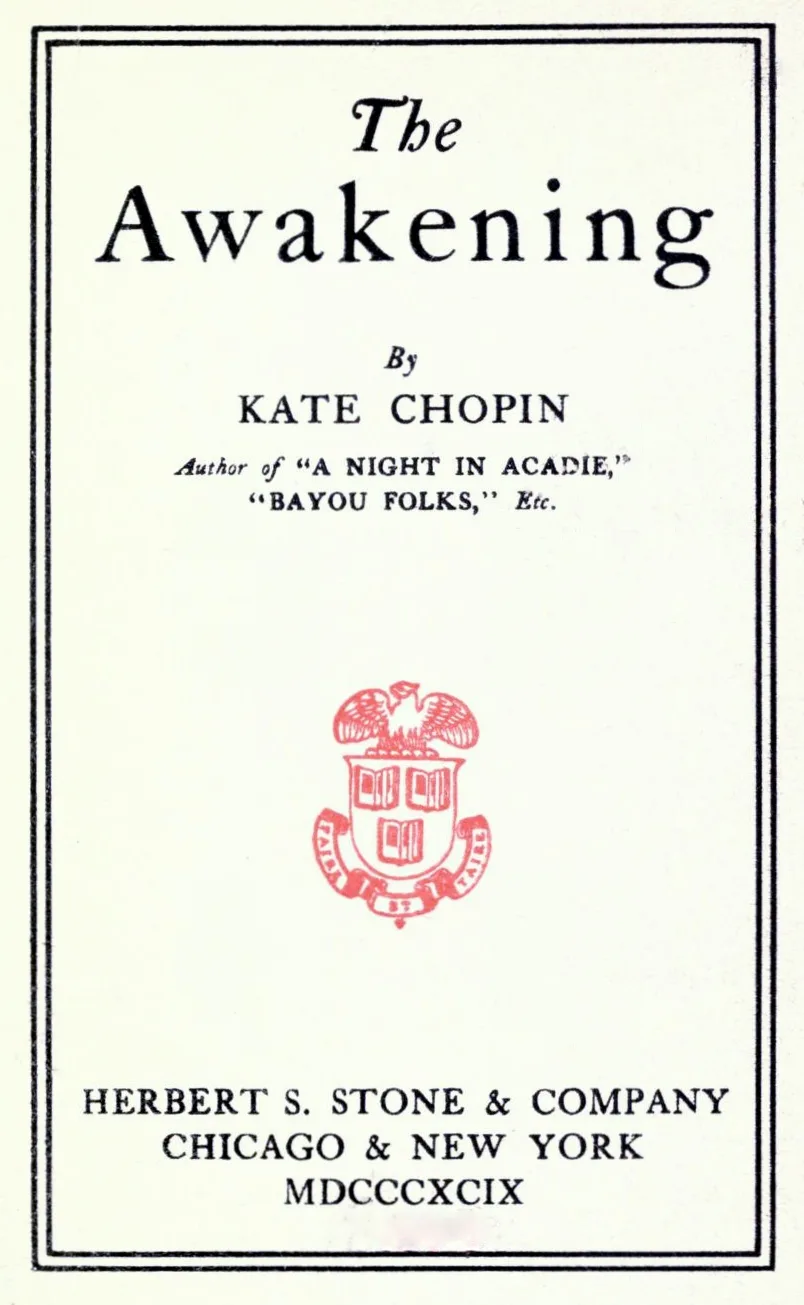
The Awakening is a short novel about one summer and the months after it, told in a cool, precise voice that never lectures. Edna Pontellier is married to a New Orleans businessman and has two sons. On holiday on Grand Isle, on the Louisiana Gulf coast, she begins to notice how little of her life she has chosen. Readers still come to it because Chopin lets Edna be restless, selfish, tender and mistaken all at once, and does not hand us a verdict. Wikipedia describes it as widely seen as a landmark work of early feminism, but the book itself is more interested in a person than in a position.
The book was controversial when it appeared in 1899. It was never technically banned, but it was censored, and reviews ran from condemnation to praise. The St. Louis Republic called it poison and too strong a drink for moral babes; the St. Louis Post-Dispatch praised it the same year. Willa Cather set it beside Madame Bovary and hoped Chopin would put her style to a better cause. Chopin never wrote another novel, and a later book of hers was cancelled when her publisher ran out of funds. She died in 1904 after a brain haemorrhage at the St. Louis World’s Fair. Her reputation recovered only after the Norwegian scholar Per Seyersted rediscovered her in the 1960s and edited her Complete Works in 1969.
While reading, listen to the sea, which keeps returning as a sound and a pull, and to the piano music that moves Edna at the Grand Isle ball. Notice the women around her: Adèle Ratignolle, devoted to husband and children, and Mademoiselle Reisz, a pianist who lives for her art. Each is a different answer to the question Edna is asking. Notice, too, how few explanations the narrator offers. Later readers have kept finding it: it was filmed as The End of August in 1981 and as Grand Isle in 1991, and a professor assigns it in an episode of the HBO series Treme.
Introducción redactada para LitMundi con ayuda de IA y contrastada con las fuentes que se indican abajo.
La disponibilidad de traducciones sigue en estudio. Un borrador no demuestra que no exista una traducción.
← Volver a la colección