
地獄變
日本語
地獄變 · 日本語, 『傀儡師』1919(復刻版、青空文庫)
LeerRyunosuke Akutagawa · 1918
El mejor pintor del Japón de Heian recibe la orden de pintar el infierno, y solo sabe pintar lo que ha visto.
Yoshihide, un maestro pintor orgulloso y poco querido, sirve al señor de Horikawa, que le encarga un biombo del infierno. Un criado de la casa cuenta lo que ocurrió después, con una voz cortés, admirativa y poco fiable.
No hay una traducción publicada en el idioma de esta interfaz. Puedes leer el original u otra edición disponible.
Leer · 日本語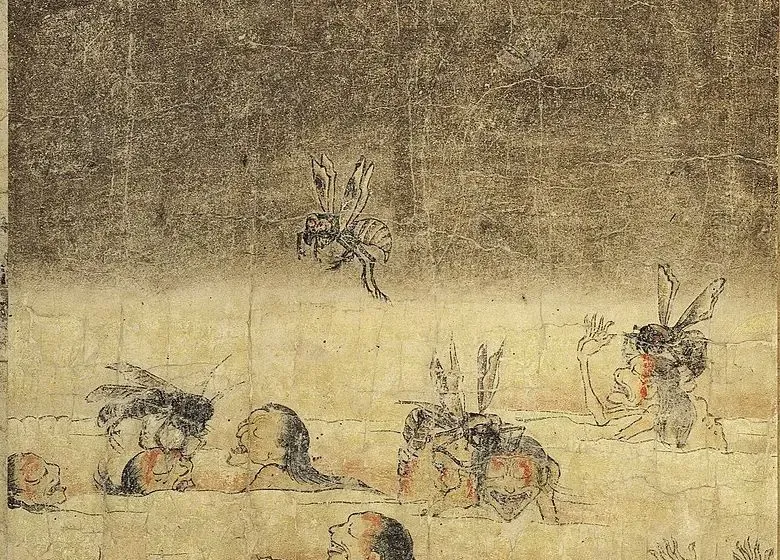
Hell Screen is a story about art and what it may cost, told by a narrator who admires a powerful man and keeps defending him. The painter Yoshihide cannot draw what he has not witnessed, and the Lord of Horikawa wants a screen of hell. The story is alive now because it will not let the reader settle into one verdict. The narrator is a household servant, mostly uninvolved, and his deference is part of what he gives away. A century later the questions are still live: what do we owe a work that is magnificent, and who pays for it?
Akutagawa serialized it in the Osaka Mainichi and Tokyo Nichinichi newspapers in May 1918, and it was collected in the 1919 volume Kugutsushi. He reworked a short tale in the medieval Uji Shūi Monogatari about a painter who looks on happily as his own house burns, and turned it into a full psychological study. The story has been adapted often: a kabuki version by Mishima Yukio premiered in 1953, a 1962 NHK dance drama followed, and the Toho film of 1969, Portrait of Hell, was directed by Toyoda Shirō.
Watch the narrator. Notice what he praises, what he excuses, and the small details he reports without comment. Watch the way Yoshihide is described as both repellent and gifted, and the way the household treats him. Read the long description of the screen with care: Akutagawa wants you to see it, and the images do more than the plot. Note that two manuscript pages thought lost were found in Kurashiki in 2007. The story has English versions by W. H. H. Norman (1948) and by Jay Rubin.
Introducción redactada para LitMundi con ayuda de IA y contrastada con las fuentes que se indican abajo.
La disponibilidad de traducciones sigue en estudio. Un borrador no demuestra que no exista una traducción.
← Volver a la colección