
Mrs. Dalloway
English
Mrs. Dalloway · English, Project Gutenberg #71865
ReadVirginia Woolf · 1925
One June day in postwar London: a hostess prepares a party while a shell-shocked veteran walks the same streets.
Virginia Woolf’s Mrs Dalloway (1925) follows a single day in the life of Clarissa Dalloway, a wealthy woman in post-First World War London, from her morning errands to the party she gives that evening. Alongside her, the novel follows Septimus Warren Smith, a veteran suffering from shell shock, and moves freely between the characters’ present thoughts and their memories. Woolf began it as a short story, “Mrs Dalloway in Bond Street”, and its working title was The Hours.
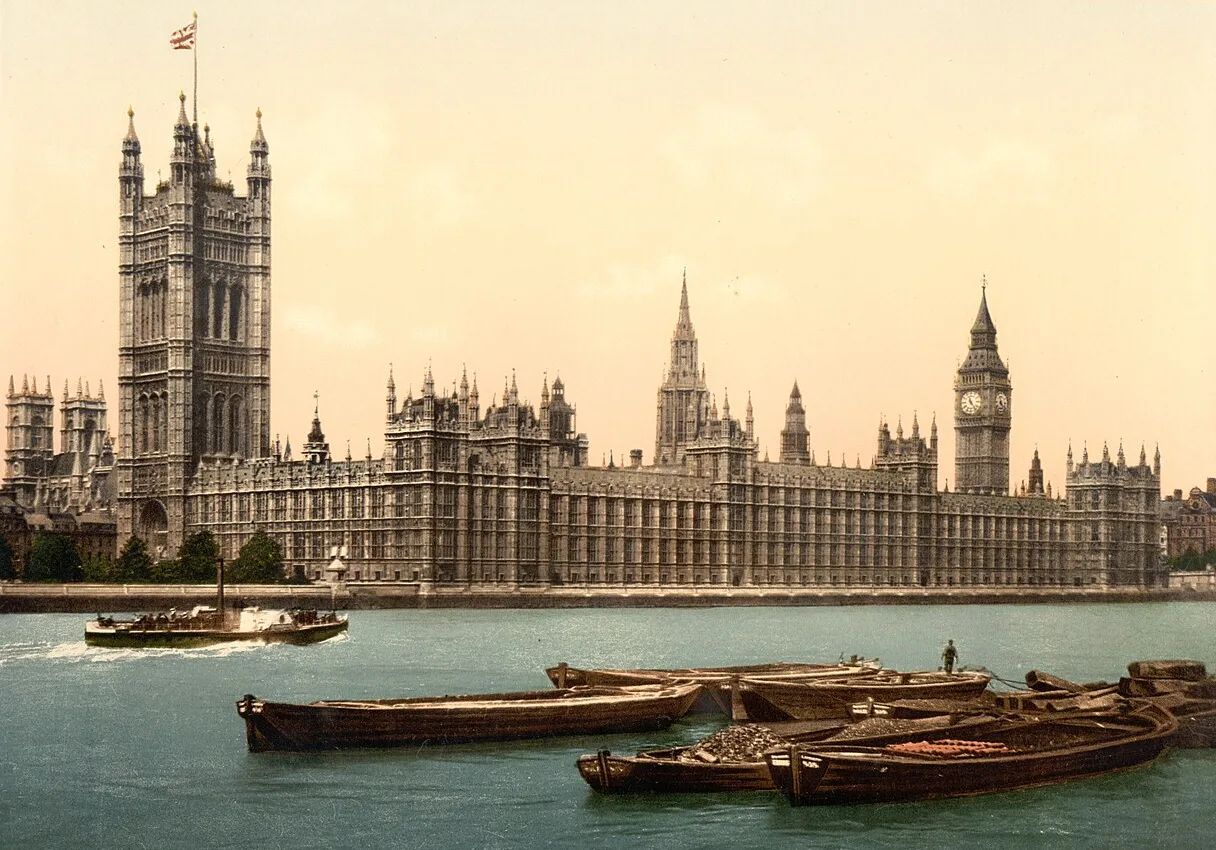
Mrs Dalloway is a novel by Virginia Woolf, published on 14 May 1925, that describes a day in the life of Clarissa Dalloway, a wealthy woman in London after the First World War. Almost all of the action takes place on a day in the middle of June 1923: Clarissa prepares to host a party that evening, and the book moves forwards and backwards in time to build a picture of her life and of the inter-war social order. Time magazine included it in 2005 on its list of the 100 best English-language novels written since the magazine began in 1923. It stays alive because a very ordinary day, flowers to buy, a visitor, a hat, holds a whole life.
Wikipedia describes the book as an example of stream-of-consciousness storytelling: each scene closely tracks the momentary thoughts of one character, and Woolf blurs the line between direct and indirect speech, shifting between omniscient description, indirect interior monologue and soliloquy. The narration follows at least twenty characters, though most of the book stays with Clarissa, Peter Walsh and Septimus Smith. It began as two short stories, “Mrs Dalloway in Bond Street” and the unfinished “The Prime Minister”, and Woolf’s original plan had Clarissa kill herself during the party. Septimus, whom Woolf called Clarissa’s “double”, was absent from that first version.
Notice how often the clock intrudes. Big Ben rings every half-hour, and the characters stop to register time passing, while their minds slip back to Bourton in Clarissa’s youth or to the war and Septimus’s dead friend Evans. Clarissa and Septimus never meet; she learns of his death only as gossip at her party. Through Septimus and his doctors, Woolf criticises how mental illness was treated, and Wikipedia notes parallels with her own illness and treatment. Content note: suicide, war trauma and psychiatric treatment are central; Woolf herself died by suicide in 1941.
Introduction written for LitMundi with AI assistance and checked against the sources listed below.
Translation availability is still being researched. A draft is not evidence that no translation exists.
← Back to collection