
Herland
English
Herland · English, Project Gutenberg #32
ReadCharlotte Perkins Gilman · 1915
Three American men fly to a hidden land of women and find their own assumptions on trial.
Vandyck Jennings, a sociology student, and two friends fly by biplane to a hidden land said to be inhabited only by women. There they meet a society with no men, no war and no domination, and are asked to explain their own world. Charlotte Perkins Gilman serialised it in her magazine The Forerunner in 1915; it was first issued as a book in 1979 by Pantheon.
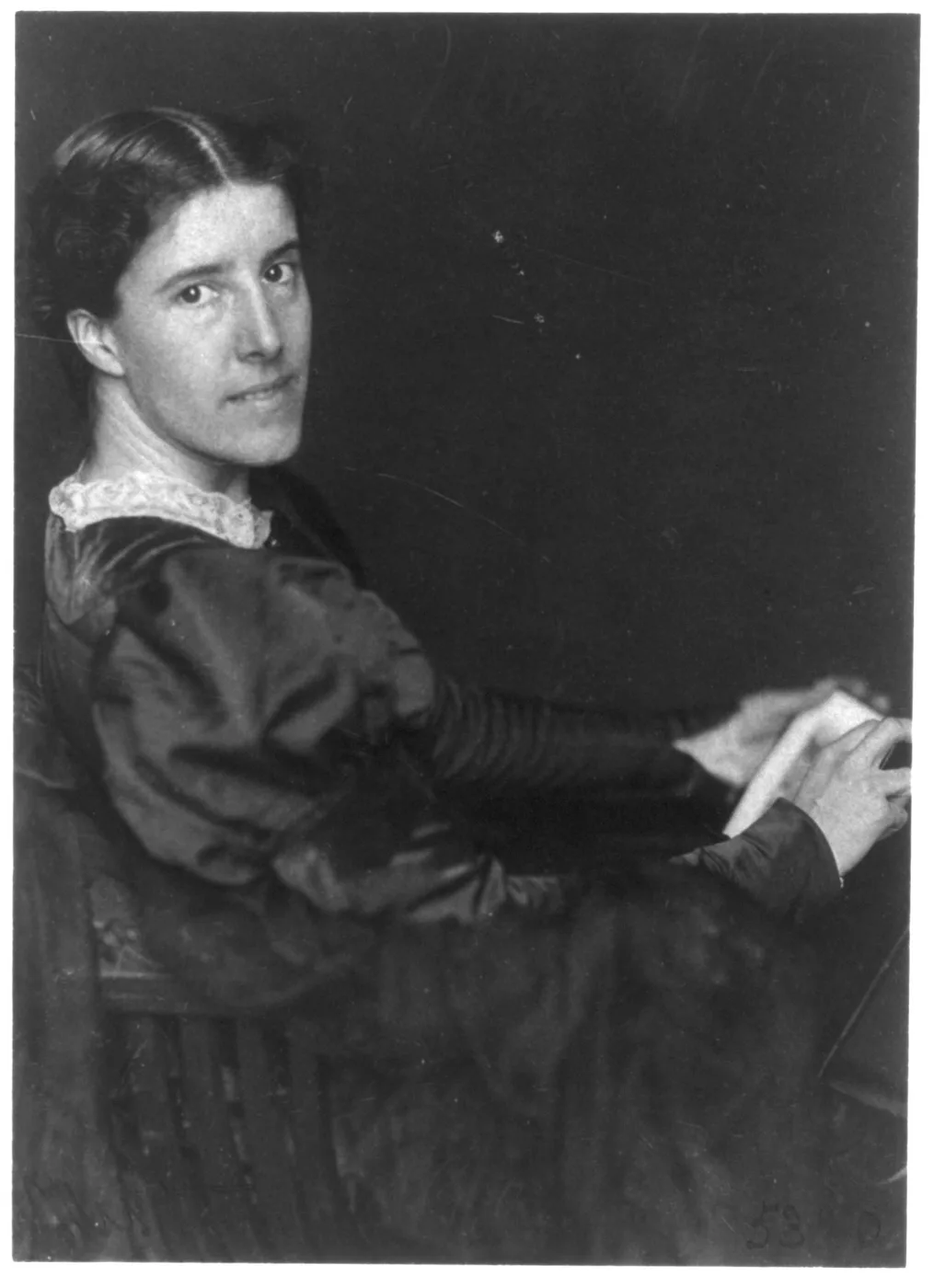
Herland is a short utopian novel narrated by Van Jennings, a sociology student who joins two friends, Terry and Jeff, on an expedition to a hidden land rumoured to hold only women. They arrive by biplane and find a society that has run itself for some two thousand years: its women bear children without men, build handsome towns, and treat raising children as work for the whole community. The book stays readable because Van is an amused, fallible guide, and because the men’s assumptions are tested as much as the country they visit. Jeff puts women on a pedestal, while Terry wants to conquer them. Neither view survives contact with Herland.
Gilman wrote and edited The Forerunner herself from 1909 to 1916, and Herland ran there as a monthly serial in 1915. Its sequel, With Her in Ourland, began in January 1916. The novel then dropped out of view for much of the twentieth century. Attention returned after 1973, when “The Yellow Wallpaper” was reprinted, and in 1979 Pantheon issued Herland as a book for the first time, with an introduction by Ann J. Lane and the subtitle “A Lost Feminist Utopian Novel.” Wikipedia describes it as a fictional version of the argument in Women and Economics (1898) about women’s dependence on male breadwinners.
Notice how often the women ask questions and the men struggle to answer, and how calm and comic the tone stays. Notice, too, what this utopia is built on. The Herlanders decide who may have children by eugenic selection, which Wikipedia calls “negative eugenics”, and critics have argued that Gilman’s talk of racial purity and “servants” shows a white feminism that overlooks women of colour. Gilman herself once declared, “I am an Anglo-Saxon before everything.” Reading Herland now means holding both things at once: a vivid early case for women’s independence, written with the prejudices of its author’s time.
Introduction written for LitMundi with AI assistance and checked against the sources listed below.
Translation availability is still being researched. A draft is not evidence that no translation exists.
← Back to collection