
The Prophet
English
The Prophet · English, Project Gutenberg #58585
ReadKahlil Gibran · 1923
On the day his ship arrives, a prophet answers the people of Orphalese on love, work, sorrow, freedom and death.
Kahlil Gibran’s The Prophet (1923) is a book of 26 prose poetry fables written in English. After twelve years in the city of Orphalese, the prophet Almustafa sees the ship that will take him home, and at the request of the seeress Almitra he speaks to the gathered crowd on love, marriage, children, work, joy and sorrow, death and other subjects before he sails. Knopf published it in New York in 1923.
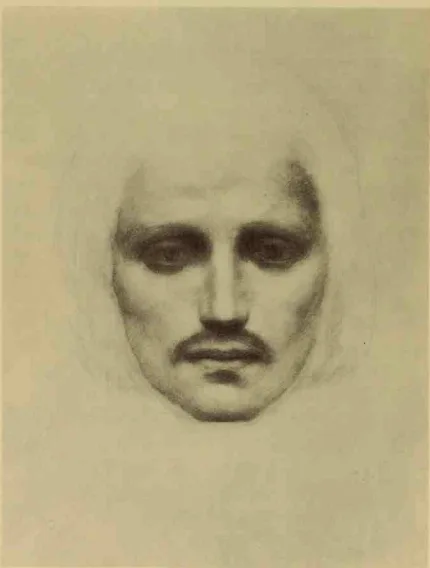
The Prophet is a book of 26 prose poetry fables written in English by the Lebanese-American poet and writer Kahlil Gibran, first published in 1923 by Alfred A. Knopf. It is his best-known work. According to Wikipedia, it has been translated into more than 100 languages, sold more than nine million copies in its American edition alone by 2012, and has never been out of print. The frame is simple: the prophet Almustafa, about to leave Orphalese, is asked to speak, and he answers one question after another, from love and marriage to pain, friendship, prayer and death. It stays alive because the questions are the ordinary ones.
Its first sales were modest: of an ambitious first printing of 2,000, Knopf sold 1,159 copies, and Wikipedia reports that demand then doubled the following year and again the year after. Gibran’s biography adds that it sold well despite a cool critical reception. Gibran, who had grown up in Bsharri and moved to Boston as a child, wrote most of his work after 1918 in English; The Madman (1918) was his first English book. He had begun work on The Prophet around 1912. Born a Maronite Christian, he drew on Christianity, the Bahá’í Faith, Islam and Sufi mysticism, and sources also link the book to William Blake and Walt Whitman.
Notice the structure. The book is a run of short, self-contained addresses, each on one topic, so you can read them one at a time and in almost any order. It also carries Gibran’s own drawings, since he was a visual artist as well as a writer, and Commons holds scans of the illustrations from the 1923 edition. For a wider picture, read it alongside the Mahjar writers, the Arab émigré authors in the Americas with whom Gibran re-founded the New York Pen League in 1920. Content note: religious and spiritual language runs throughout, and death is one of the subjects.
Introduction written for LitMundi with AI assistance and checked against the sources listed below.
Translation availability is still being researched. A draft is not evidence that no translation exists.
← Back to collection