
The Madman: His Parables and Poems
English
The Madman: His Parables and Poems · English, Project Gutenberg #5616
ReadKahlil Gibran · 1918
A man wakes to find his masks stolen, runs bare-faced into the market, and is called mad. Gibran’s first book in English.
In the prologue, a man loses his seven masks, runs through the market with his own face uncovered, and is declared mad. He takes the word as a gift and speaks on from there, in a prologue and thirty-four short parables and prose poems about gods, kings, a scarecrow, a wise dog, war and the self. Kahlil Gibran’s first book in English was published by Alfred A. Knopf in New York in 1918.
The Madman is a small book made of a prologue and thirty-four parables, fables and prose poems, each short enough to read in a minute or two. The prologue sets the terms. A man wakes to find the seven masks he has worn in seven lives stolen, runs bare-faced through the crowded streets, and is called mad by a youth on a rooftop. He decides madness has given him “the freedom of loneliness and the safety from being understood.” The pieces that follow keep testing ordinary certainties: piety, ambition, war, being seen, being understood. It stays alive because the questions are plain and the pages are brief.
Gibran was born in Bsharri, in Ottoman Mount Lebanon, emigrated to the United States as a boy and settled in New York in 1911. He had already published a book in Arabic in 1905 and shown his drawings in Boston and New York. The Madman, issued by Knopf in 1918 with illustrations reproduced from his own drawings, was his first book in English and, as Wikipedia puts it, the start of the second phase of his career. The short forms he used here, parable and prose poem, carried over into The Prophet, the book of 26 prose poetry fables that Knopf published in 1923. In Egypt, May Ziadeh reviewed The Madman in the magazine Al-Hilal.
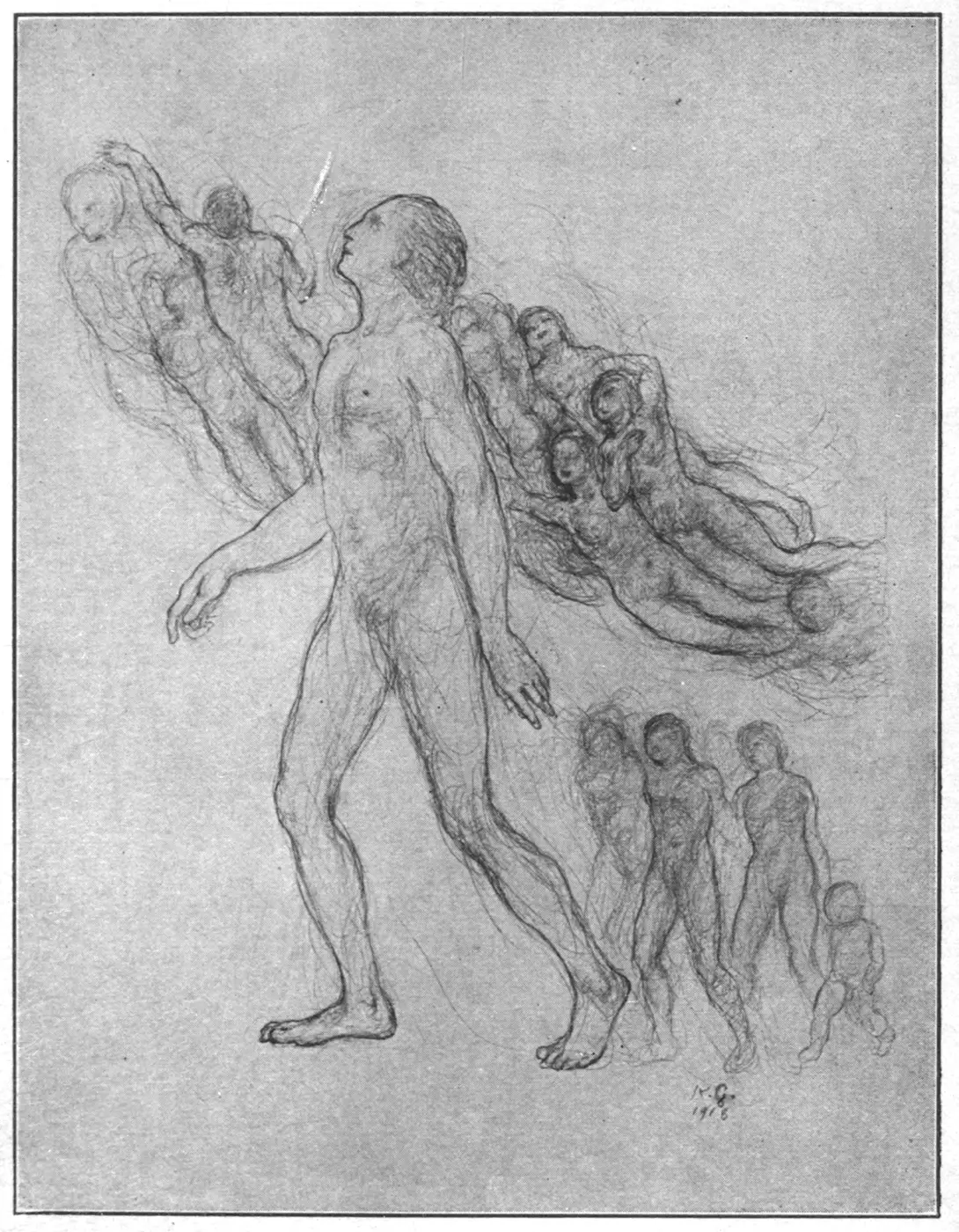
Read a few pieces at a time rather than straight through, and watch who is speaking. Sometimes it is the madman himself, sometimes a hermit, a king, a fox or a blade of grass, and the book keeps changing masks, which fits its opening. Notice how often a piece ends without a moral, or with a small turn that undercuts the speaker. Look at the drawings too: they are Gibran’s, reproduced in the 1918 book, and they give the words a second voice. If you know Gibran from The Prophet, this is the sharper, stranger early version of the same voice.
Introduction written for LitMundi with AI assistance and checked against the sources listed below.
Translation availability is still being researched. A draft is not evidence that no translation exists.
← Back to collection