
Три сестры
Русский
Три сестры · Russian, Wikisource (Chekhov, 1901 text)
ReadAnton Chekhov · 1901
Three sisters in a provincial town keep waiting to return to Moscow, while officers, neighbours and long talks fill their days.
Three Sisters (Три сестры) is a play in four acts by Anton Chekhov, written in 1900 and first performed by the Moscow Art Theatre on 31 January 1901. Olga, Masha and Irina Prozorov have lived in a provincial town since leaving Moscow eleven years earlier, and they still talk about going back. Around them, army officers, a new member of the household and money troubles keep life moving without taking the sisters anywhere.
No translation is published in this interface language yet. You can read the original or another available edition.
Read · Русский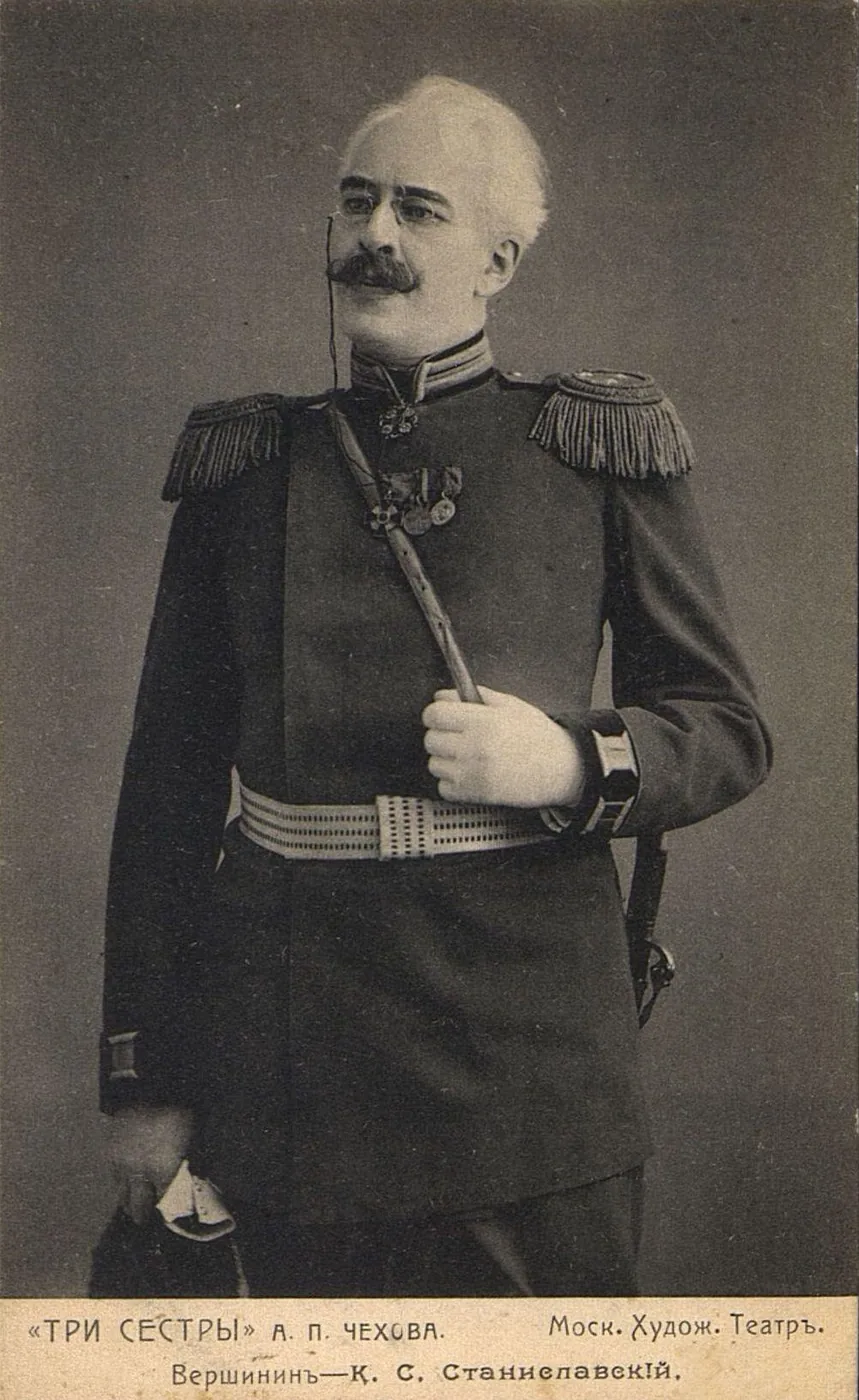
Three Sisters is a play in four acts that Chekhov wrote in 1900 and that opened at the Moscow Art Theatre in January 1901. Its sisters, Olga, Masha and Irina Prozorov, are stuck in a provincial town and keep saying they will return to Moscow, while officers, relatives and neighbours keep the house in motion. The play still feels alive because its people want something badly and keep stopping short of it. It is funny and painful in the same breath, so a scene can make an audience laugh and then sink in.
What was new was the method. Wikipedia’s summary of Chekhov’s four major plays describes a “theatre of mood” and a “submerged life in the text” offered in place of conventional action. The premiere was directed by Konstantin Stanislavski and Vladimir Nemirovich-Danchenko; Stanislavski also played Vershinin, and Olga Knipper played Masha, a part Chekhov wrote for her. Chekhov felt that Stanislavski’s “exuberant” direction had masked the play’s subtleties, and that only Knipper had shown her character developing as he intended. Audiences responded to the sisters’ loneliness, and the play soon became part of the company’s repertoire.
Notice how the play handles time and talk. The sisters keep planning a move and spend the evening circling it. In the first act Vershinin speaks about the future, and Masha, in the character summary on Wikipedia, answers by declaring she is staying for lunch. Much of the plot’s movement comes from money, postings and family arrangements rather than from anyone’s decision. Chekhov spent about a year writing the play, which is one reason its small delays and hopes feel so exact.
Introduction written for LitMundi with AI assistance and checked against the sources listed below.
Translation availability is still being researched. A draft is not evidence that no translation exists.
← Back to collection