
Wuthering Heights
English
Wuthering Heights · English, Project Gutenberg #768
ReadEmily Brontë · 1847
Two houses on the Yorkshire moors, two families, and a foundling whose arrival unsettles both for a generation.
A tenant at Thrushcross Grange visits his landlord at Wuthering Heights, a farmhouse on the Yorkshire moors, and a housekeeper tells him how the place came to be so bitter. Her story reaches back about thirty years, to a boy taken in off the streets and the girl he grew up beside. Emily Brontë’s only novel is a love story with almost no softness in it.
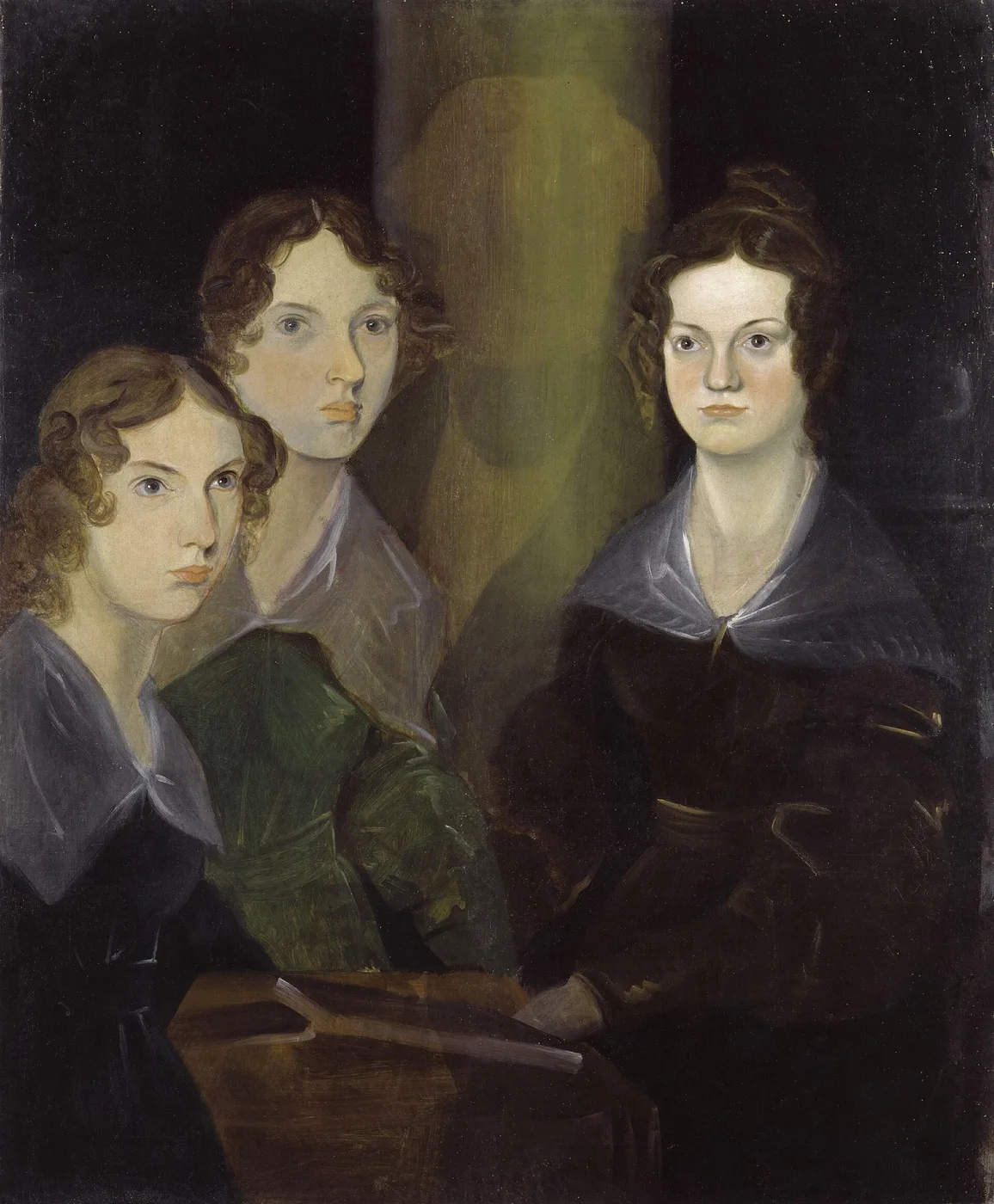
Wuthering Heights is a novel about two houses, one exposed to the moor and one sheltered from it, and about what happens when a stranger raised in the first is let into the second. It still reads as alive because its people are neither likable nor tidy. They are stubborn, cruel, funny and unforgiving, and the book does not ask for forgiveness on their behalf. It is also built as a puzzle: a visitor, Lockwood, hears the whole story from the housekeeper Nelly Dean, so every scene reaches us through someone with a view to protect.
Emily Brontë published it on 24 November 1847 under the name Ellis Bell, in a three-volume set with Anne’s Agnes Grey from the publisher Thomas Cautley Newby. Early reviewers admired its force and recoiled from it; one called it a “compound of vulgar depravity and unnatural horrors”, and Dante Gabriel Rossetti called it a “fiend of a book”. Its frame of nested narrators, with a diary and several other voices cutting in, is what critics keep returning to. Virginia Woolf in 1925 set it above Jane Eyre. Emily died in December 1848 aged thirty, having written one novel.
Pay attention to who is speaking at any moment, and ask what Lockwood and Nelly each stand to gain from the version they give; critics have long questioned both. Notice the contrast between the Heights and Thrushcross Grange, and how weather, furniture and doors do work that other novels give to description of feeling. Emily spent most of her life at Haworth parsonage and wrote about the moors from daily knowledge. In Vietnamese the book is usually known as Đồi gió hú.
Introduction written for LitMundi with AI assistance and checked against the sources listed below.
Translation availability is still being researched. A draft is not evidence that no translation exists.
← Back to collection