
方丈記
日本語
方丈記 · 日本語, 『國文大觀 日記草子部』1909(青空文庫)
LeerKamo no Chōmei · 1212
Tras el incendio, la tormenta y la hambruna, un antiguo poeta de la corte describe la pequeña choza donde eligió pasar sus últimos días.
El Hōjōki, escrito en 1212, empieza con un río que nunca es el mismo y pregunta luego qué puede conservar de verdad una persona. Kamo no Chōmei describe los desastres que presenció en la capital y la choza de diez pies cuadrados donde se instaló como ermitaño. Es breve, sereno e inesperadamente personal.
No hay una traducción publicada en el idioma de esta interfaz. Puedes leer el original u otra edición disponible.
Leer · 日本語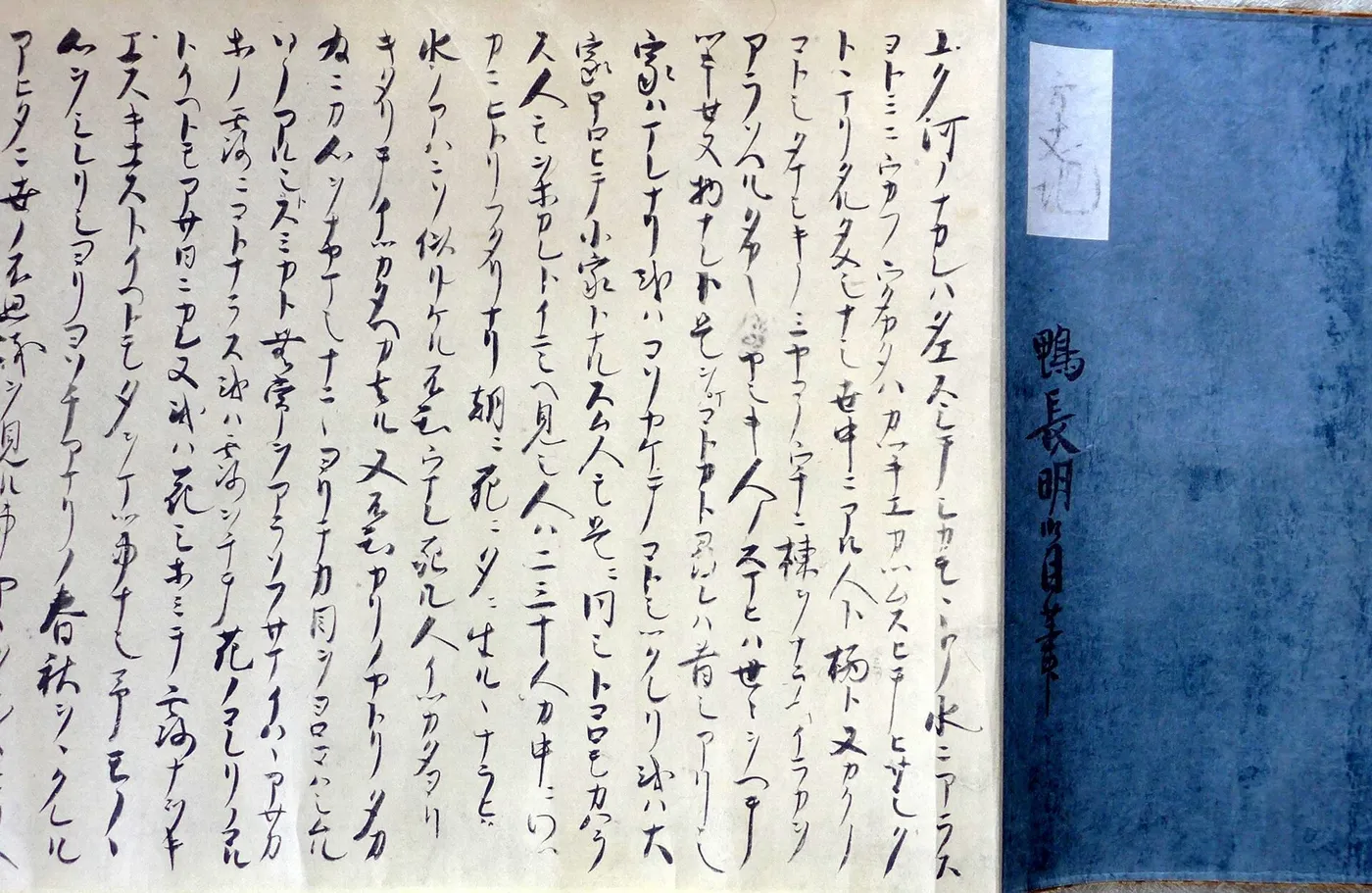
Hōjōki, “An Account of a Ten-Foot-Square Hut”, was written in March 1212 by Kamo no Chōmei, a former court poet who had become a recluse. The hut he describes was ten feet square and under seven feet high. The book opens with lines that read in English as “The flow of the river never ceases, and the water never stays the same”, a statement of mujō, impermanence. It describes the capital in turmoil and a man at peace with very little, and it is brief enough to read at one sitting. The English translation by Natsume Sōseki dates from 1891.
It is a leading example of recluse literature (sōan bungaku) and of zuihitsu, the loose, personal essay form. Chōmei was born the second son of the superintendent of the Lower Kamo (Shimogamo) Shrine, was passed over for the post that went to a cousin, served in Retired Emperor Go-Toba’s Poetry Office, and became a recluse in 1204. He spent about five years at Ōhara before moving to Hino. The Vimalakīrti Sutra shaped the hut’s design and the book, and Yoshishige no Yasutane’s Chiteiki (982) and Bai Juyi were among his models. A manuscript attributed to his own hand survives at Daifukukō-ji. Modern English translators include Meredith McKinney (2014) and Matthew Stavros (2020).
Notice how exactly he measures things: the size of the hut, what it holds, what he does through the seasons. The calm is built from lists and numbers, and the earlier pages on the capital give it weight. Notice, too, that the book does not simply praise withdrawal; it keeps testing its own claims, and the last pages turn the question on the narrator himself. Readers who know the Buddhist notion of vô thường will recognise its Japanese form in mujō, and the account of the capital covers conditions from 1177 to 1182, a brutal stretch of recent memory for him.
Introducción redactada para LitMundi con ayuda de IA y contrastada con las fuentes que se indican abajo.
La disponibilidad de traducciones sigue en estudio. Un borrador no demuestra que no exista una traducción.
← Volver a la colección