
La Mare au Diable
Français
La Mare au Diable · French, Project Gutenberg #23582
ReadGeorge Sand · 1846
Berry, 1840s: a widowed ploughman rides out to court a rich widow and ends up falling for a sixteen-year-old girl on the way.
George Sand’s La Mare au Diable (The Devil’s Pool, 1846) is the first of her four pastoral novels. Germain, a twenty-eight-year-old widower with three children, is urged by his father-in-law to remarry and sets off to meet a well-off widow, taking a sixteen-year-old girl, Marie, who is going to a new job. A night by the pond of the title changes what he wants. Sand says it grew from a Holbein engraving of a ploughman and a scene she watched at sowing time.
No translation is published in this interface language yet. You can read the original or another available edition.
Read · Français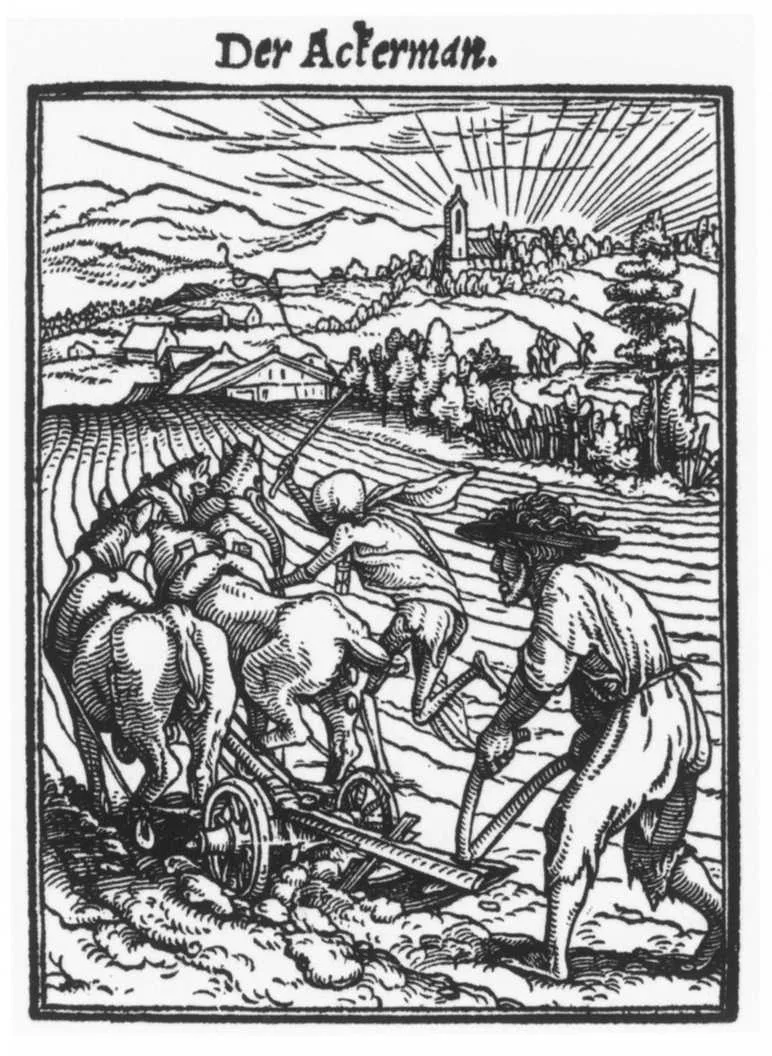
La Mare au Diable (The Devil’s Pool) is an 1846 novel by George Sand, the first of four pastoral novels she based on her childhood countryside; the others are François le Champi, La Petite Fadette and Les Beaux Messieurs de Bois-Doré. Its plot is small: a widowed farmer, his three children, an elderly father-in-law, a journey of half a day and a night spent on the way. Sand herself says she wanted to do something “very touching and very simple”. It stays alive because a plain story told with that much attention to work, weather and manners reads as freshly now as it did to her first readers, and because Wikipedia notes it has been translated into English seven times, more than any other Sand novel.
Sand was already known for passionate, socially daring novels such as Indiana and Lélia when she turned to peasant life. In the opening chapter, addressed to the reader, she describes Holbein’s engraving of a ploughman, with Death cracking a whip beside his horses, and argues that art’s task is feeling and love, not terror. Chapter two begins with her walking through the fields after studying that ploughman. In a later preface she says the engraving and a real scene she saw at sowing time are all that prompted the story. Wikipedia reports that the opening scene is supposed to have inspired Rosa Bonheur’s 1849 painting Ploughing in the Nivernais.
Notice how the book begins with a painting-like image of labour and only then turns to Germain, whose life is arranged by his elders in a quiet, practical way. Notice, too, how much the story is carried by ordinary things: the road, the heath, the oak trees, the evening prayer. Critics have also offered other readings; one, by James Hamilton, sees Marie as the novel’s central heroine. Content note: Marie is a young woman whom her employer is said to have tried to assault; this happens off the page and is not described, and the rest of the book is gentle and chaste.
Introduction written for LitMundi with AI assistance and checked against the sources listed below.
Translation availability is still being researched. A draft is not evidence that no translation exists.
← Back to collection