
La vida de Lazarillo de Tormes y de sus fortunas y adversidades
Español
La vida de Lazarillo de Tormes · Español, Project Gutenberg #320 (Burgos, 1554)
ReadAnonymous · 1554
A hungry boy leads a blind man down the road and learns, master by master, how the world really feeds its people.
Lázaro writes a letter to an unnamed “Vuestra Merced” to explain how he came to be who he is, starting with a poor childhood and a blind man who takes him on as guide. From there he passes from master to master, among them a stingy priest and a squire with nothing but his pride. Printed anonymously in 1554, it is the book that started the picaresque.
No translation is published in this interface language yet. You can read the original or another available edition.
Read · Español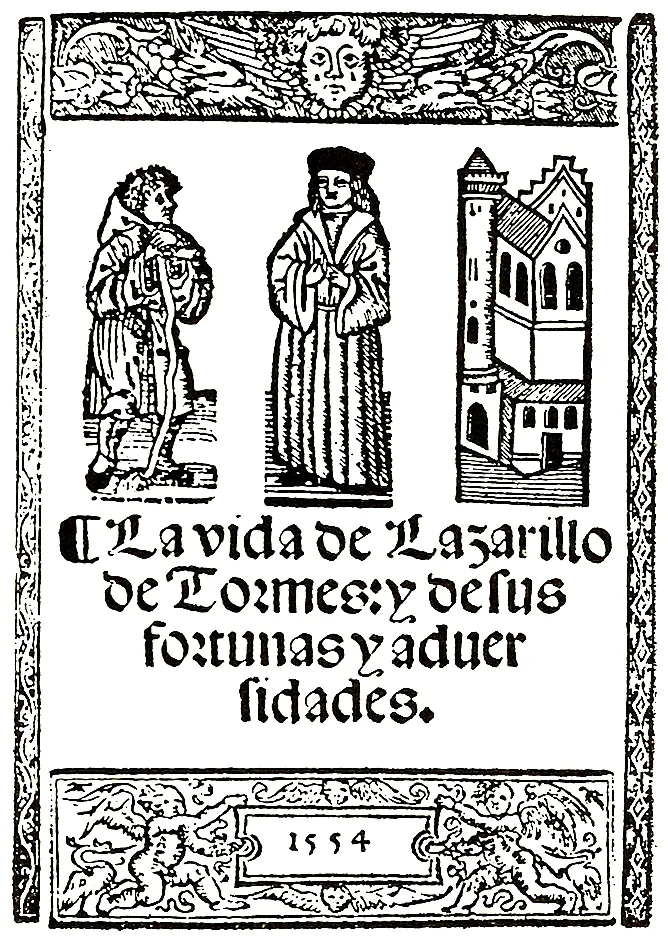
La vida de Lazarillo de Tormes is a short book, divided into seven tratados, narrated by a man who is writing to explain himself. It still reads as alive because its subject is ordinary and unsentimental: a child who has to eat, and who discovers that everyone he serves is also performing something, whether piety, nobility or generosity. Lázaro is neither saint nor monster. He is funny, quick, sometimes cruel, and the humour never hides the hunger underneath. A reader today recognises the voice at once: someone with no advantages telling his own story with a straight face and a very sharp eye for hypocrisy.
Its novelty was the voice and the angle. Instead of knights, shepherds or saints, the narrator is a poor boy who tells his life in the first person, as a letter, and the book moves through society by following a servant from one household to the next. Lazarillo is widely regarded as the founding text of the picaresque, and the genre it started flourished across Europe for over two hundred years. In Don Quixote, Ginés de Pasamonte boasts that his own book is better than Lazarillo de Tormes. It was also dangerous: the Spanish Inquisition listed it on the 1559 index, and a cut version was allowed in 1573.
Notice how every master has a lesson attached, and how each lesson is paid for in food. The blind man, the priest and the squire are the three to watch: each one teaches Lázaro something different, and each one is more complicated than the first joke about him suggests. Notice, too, the letter frame: Lázaro is explaining himself to someone who has asked, so what he chooses to emphasise, and how proudly, is part of the story. The language is plain and quick, and the prologue and early pages carry the strongest humour. You need no background to begin.
Introduction written for LitMundi with AI assistance and checked against the sources listed below.
Translation availability is still being researched. A draft is not evidence that no translation exists.
← Back to collection