
Young Goodman Brown
English
Young Goodman Brown · English, Project Gutenberg #512 (Mosses from an Old Manse)
ReadNathaniel Hawthorne · 1835
At sunset a newly married Puritan walks into the forest outside Salem Village, sure he will be back by morning.
Goodman Brown, three months married to a wife named Faith, leaves her at dusk for an errand in the forest, though she asks him to stay. On the dark path he meets a traveler who seems to know his family and to know the town better than he does. Hawthorne’s story appeared anonymously in 1835 and became one of the most discussed short stories in American literature.
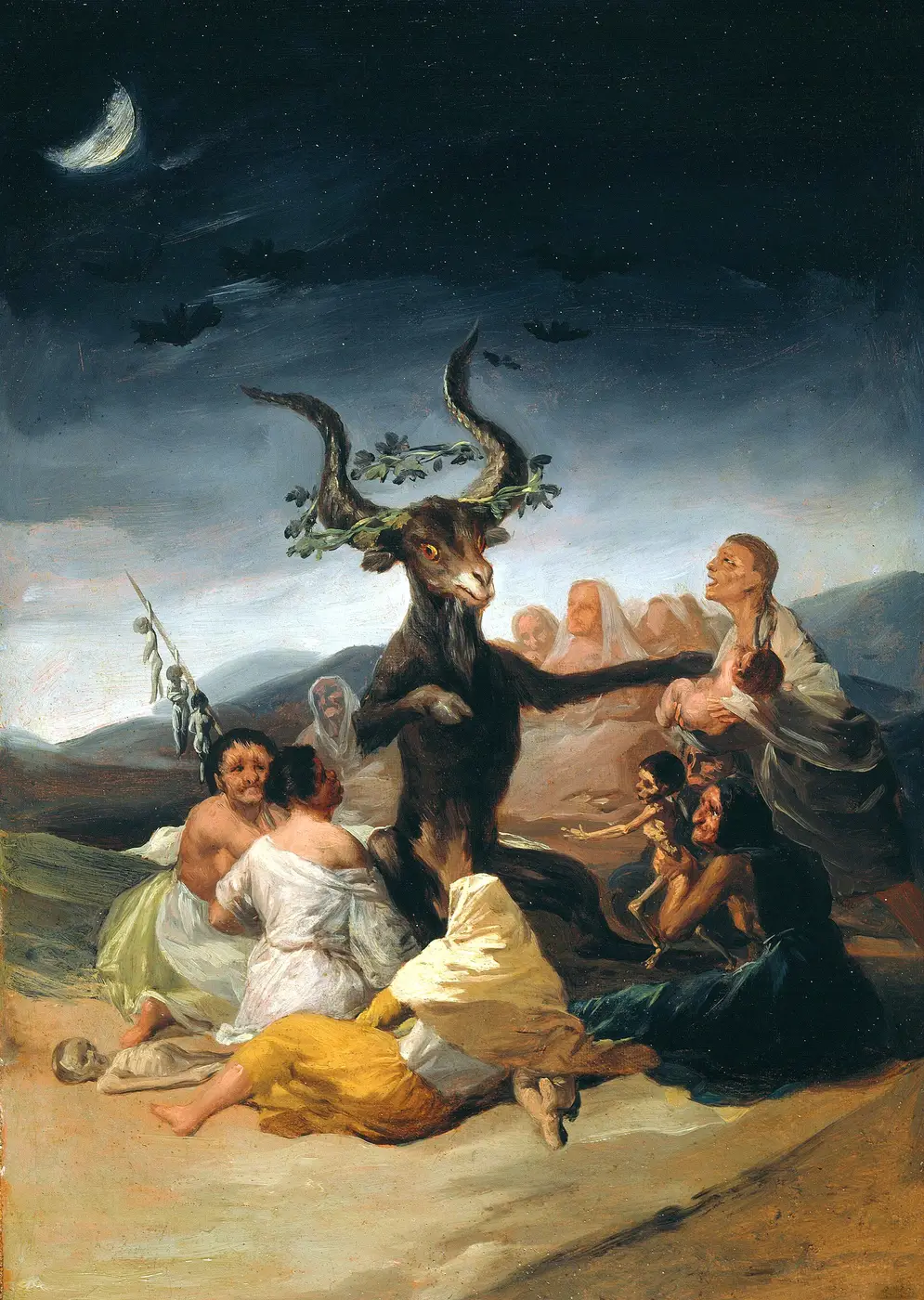
“Young Goodman Brown” is a short story of a few thousand words that behaves like a nightmare told in daylight prose. A man leaves his wife in a Puritan village at dusk, walks into the forest, and meets people he thought he knew. It still reads as alive because its subject is not witchcraft but suspicion: what happens to a person who is shown, or believes he is shown, that everyone around him is not what they seem. Hawthorne keeps the scene lit by flame and shadow and never settles the matter for the reader, which is why teachers and critics keep returning to it.
Hawthorne published it in April 1835 in The New-England Magazine without his name; it was credited to “the author of ‘The Gray Champion’”. He reprinted it under his own name in Mosses from an Old Manse (1846). It belongs to his habit of turning New England’s Puritan past into allegory, and he had a personal reason: his great-great-grandfather John Hathorne was a judge at the Salem witch trials, and Hawthorne later added a “w” to the family name. Melville called the story “as deep as Dante”, and Henry James a “magnificent little romance”. Stephen King has named it his favorite Hawthorne story.
Read the names and the doubling. The wife is called Faith; the hero is a “Goodman”; the older traveler looks oddly like him. Notice how often Hawthorne writes “perhaps”, “it seemed”, “he knew not whether”, and what those hedges let him do. Watch Brown’s mood as well as the plot: the story is as much about how he sees the village afterward as about what he sees in the forest. Vietnamese readers who know Hawthorne mainly through The Scarlet Letter will find the same Puritan landscape here, compressed into one night.
Introduction written for LitMundi with AI assistance and checked against the sources listed below.
Translation availability is still being researched. A draft is not evidence that no translation exists.
← Back to collection