
Narrative of the Life of Frederick Douglass, an American Slave
English
Narrative of the Life of Frederick Douglass · English, Project Gutenberg #23
ReadFrederick Douglass · 1845
A man born into slavery on Maryland’s Eastern Shore tells how he learned to read, and what reading did to him.
Frederick Douglass, born into slavery in Talbot County, Maryland, tells his own story in eleven short chapters: separated from his mother, passed between masters, taught the alphabet by a mistress and then forbidden more. Published in Boston in 1845, seven years after he reached the North, it set out what slavery did to enslaved people and to the people who held them, in plain, controlled prose. Douglass signed it with his own name, at a time when that was not safe.
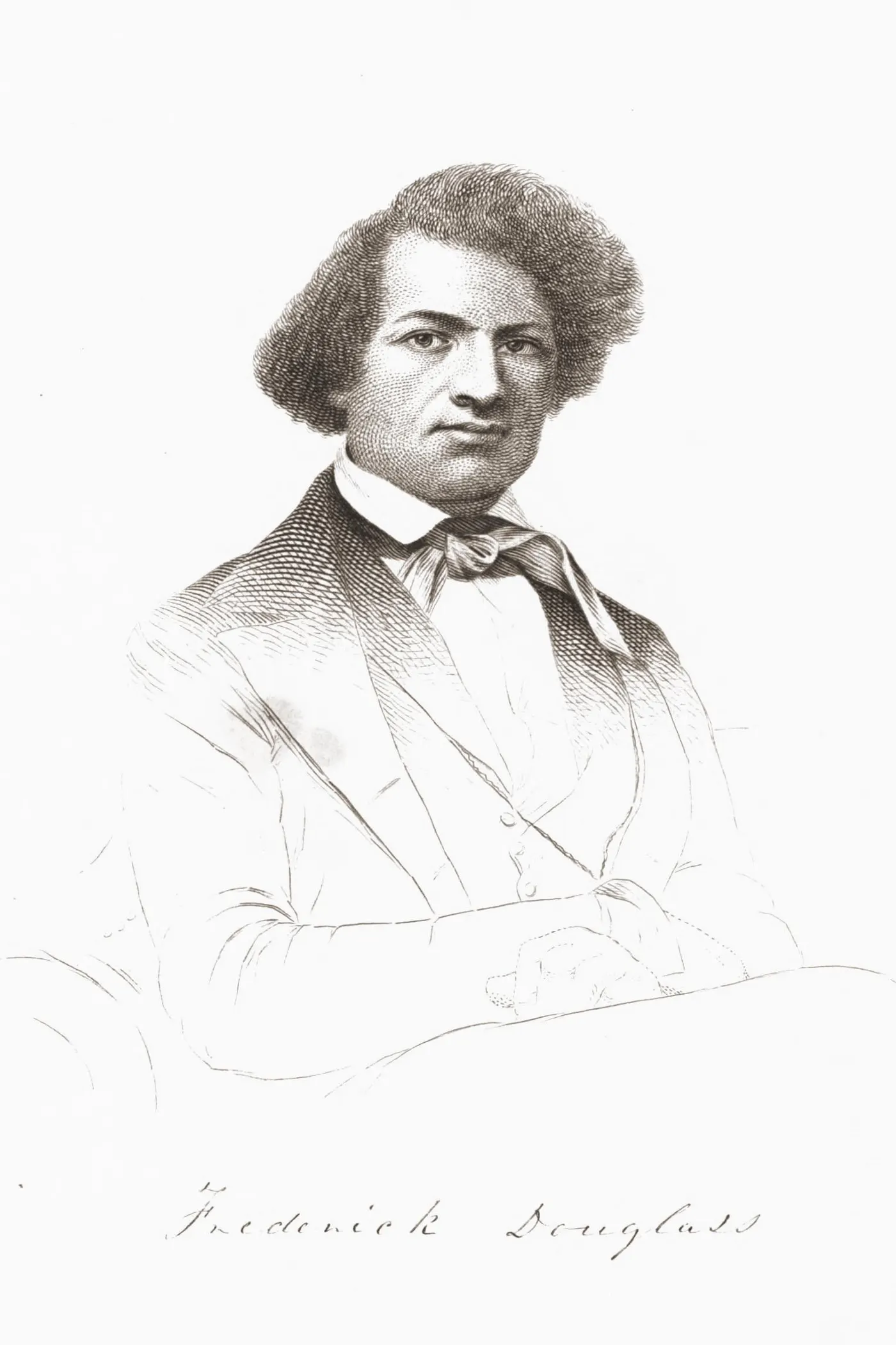
The Narrative runs to eleven chapters and an appendix, short enough to read in an evening, and it still reads as if the man were in the room. Douglass does not argue from abstractions. He gives names, places, dates and the small daily facts of a life under masters. His prose is level and exact, and the restraint makes the cruelty harder to look away from. It also reads as a story of a mind: the book keeps returning to how a boy learns to read, to count, to doubt what he has been told, and to speak.
Published on 1 May 1845 by the Anti-Slavery Office in Boston, it carried a preface by William Lloyd Garrison and a letter from Wendell Phillips, vouching for the author’s truthfulness. It sold about 5,000 copies within four months, and almost 30,000 by 1860; a Dublin edition from the printer Richard D. Webb was widely praised. Margaret Fuller said she had never read a narrative more simple, true and coherent. Later readers kept returning to it: Angela Davis analysed it in two lectures at UCLA in 1969, and scholars such as Hortense Spillers, Saidiya Hartman and Fred Moten have worked from its first chapter.
Notice what Douglass leaves out. He gives no details of his escape, withholding the particulars to protect those who helped others flee. Watch the chapter on his fight with Edward Covey, the overseer who tried to tie him up and whom he resisted for about two hours; he treats it as a turn in how he sees himself, not as a triumph. Notice, too, how often reading and speaking matter more than any single act of violence. This edition translates Douglass’s own chapters and the Appendix, not Garrison’s preface or Phillips’s letter.
Introduction written for LitMundi with AI assistance and checked against the sources listed below.
English
Narrative of the Life of Frederick Douglass · English, Project Gutenberg #23
ReadTiếng Việt
Bản dịch tiếng Việt bằng AI · đánh giá AI v2
ReadTranslation availability is still being researched. A draft is not evidence that no translation exists.
← Back to collection