
Great Expectations
English
Great Expectations · English, Project Gutenberg #1400 (1867 edition)
ReadCharles Dickens · 1861
An orphan on the Kent marshes dreams of becoming a gentleman: Charles Dickens’s 1860–61 novel of ambition, class and shame.
Great Expectations is a novel by Charles Dickens, published as a weekly serial in All the Year Round from December 1860 to August 1861 and in book form by Chapman & Hall in 1861. It follows Pip, a boy from the Kent marshes who is given the chance to become a gentleman in London, and Pip tells the story as an adult looking back. The text on this site is Project Gutenberg #1400, the 1867 edition of the complete novel in 59 chapters.
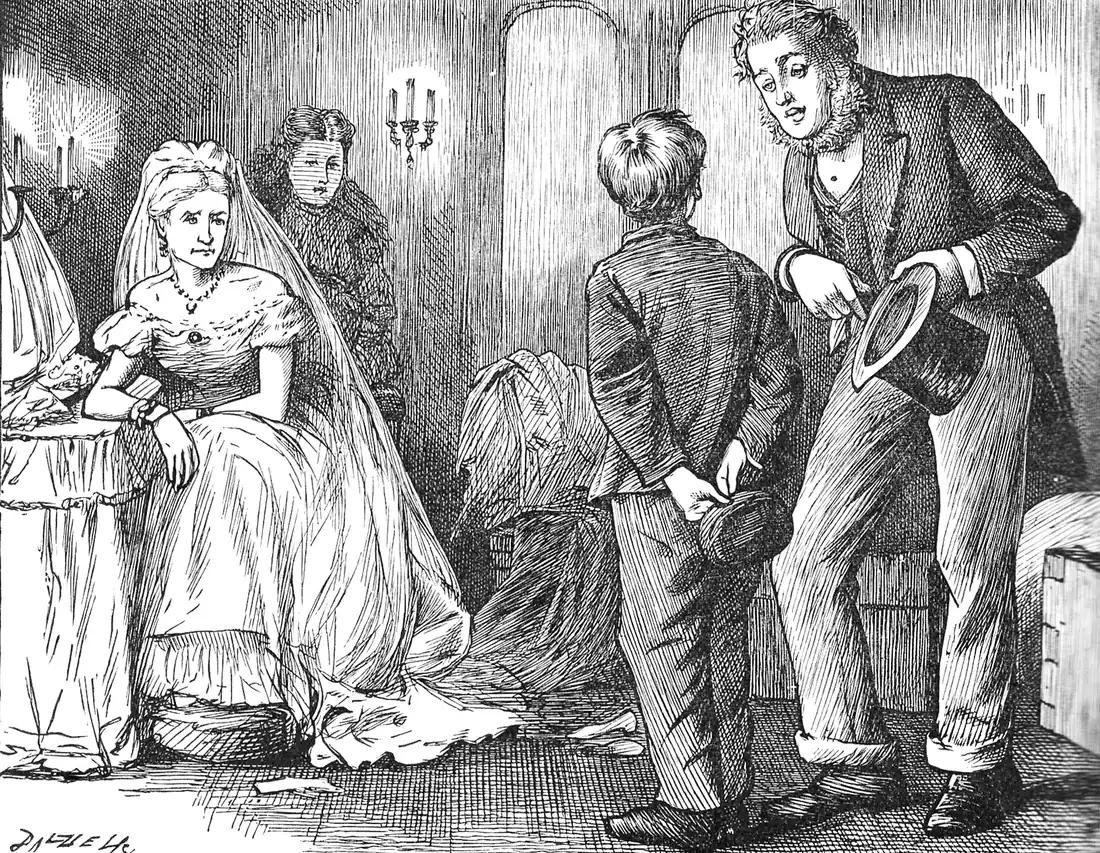
Great Expectations follows Pip, an orphan raised by a harsh older sister and her gentle husband, the blacksmith Joe Gargery, on the Kent marshes. A terrifying meeting with an escaped convict, and a strange visit to the bitter Miss Havisham and her cold ward Estella, set him on a path toward London and the manners of a gentleman. The book still feels alive because Pip has to learn what his ambitions have cost him and the people who loved him before he had money. Dickens tells the story in the first person, so the reader hears a grown man judging his younger self, sometimes tenderly and often with painful honesty.
Great Expectations is Dickens’s second novel, after David Copperfield, to be narrated entirely in the first person, and Wikipedia calls it a bildungsroman, a novel about growing up. It first appeared as weekly episodes in his periodical All the Year Round, from 1 December 1860 to August 1861, so each short chapter had to centre on a single subject. Before publication Dickens rewrote the ending after Edward Bulwer-Lytton said the original was too sad. The book was very widely praised at the time, although Thomas Carlyle dismissed it as “that Pip nonsense” while laughing at each new instalment.
Notice how Pip’s feelings about Joe change, because the book turns on the gap between what a person admires and what is actually good. In chapter 13 Joe comes to Satis House in his Sunday clothes, and Pip admits that he was ashamed of the dear good fellow when Estella’s eyes laughed at him. That admission drives much of the story. Dickens also rewrote the ending before publication, so it is worth reading the closing meeting in the ruins of Satis House with that history in mind. The Vietnamese text on this site covers all 59 chapters, from the first line to the last, so a reader can follow Pip from the marshes to the final page.
Introduction written for LitMundi with AI assistance and checked against the sources listed below.
Translation availability is still being researched. A draft is not evidence that no translation exists.
← Back to collection