
Pride and Prejudice
English
Pride and Prejudice · English, first edition, T. Egerton 1813 (Project Gutenberg #42671)
ReadJane Austen · 1813
A clever young woman and a proud rich man misjudge each other in a country neighbourhood where every marriage is a financial plan.
When a wealthy bachelor rents a house near the Bennets, their neighbours begin planning marriages, and Elizabeth Bennet forms a quick opinion of his proud friend Mr Darcy. Jane Austen’s comedy of manners is also a study of how people are wrong about each other, and how long it takes to find out.
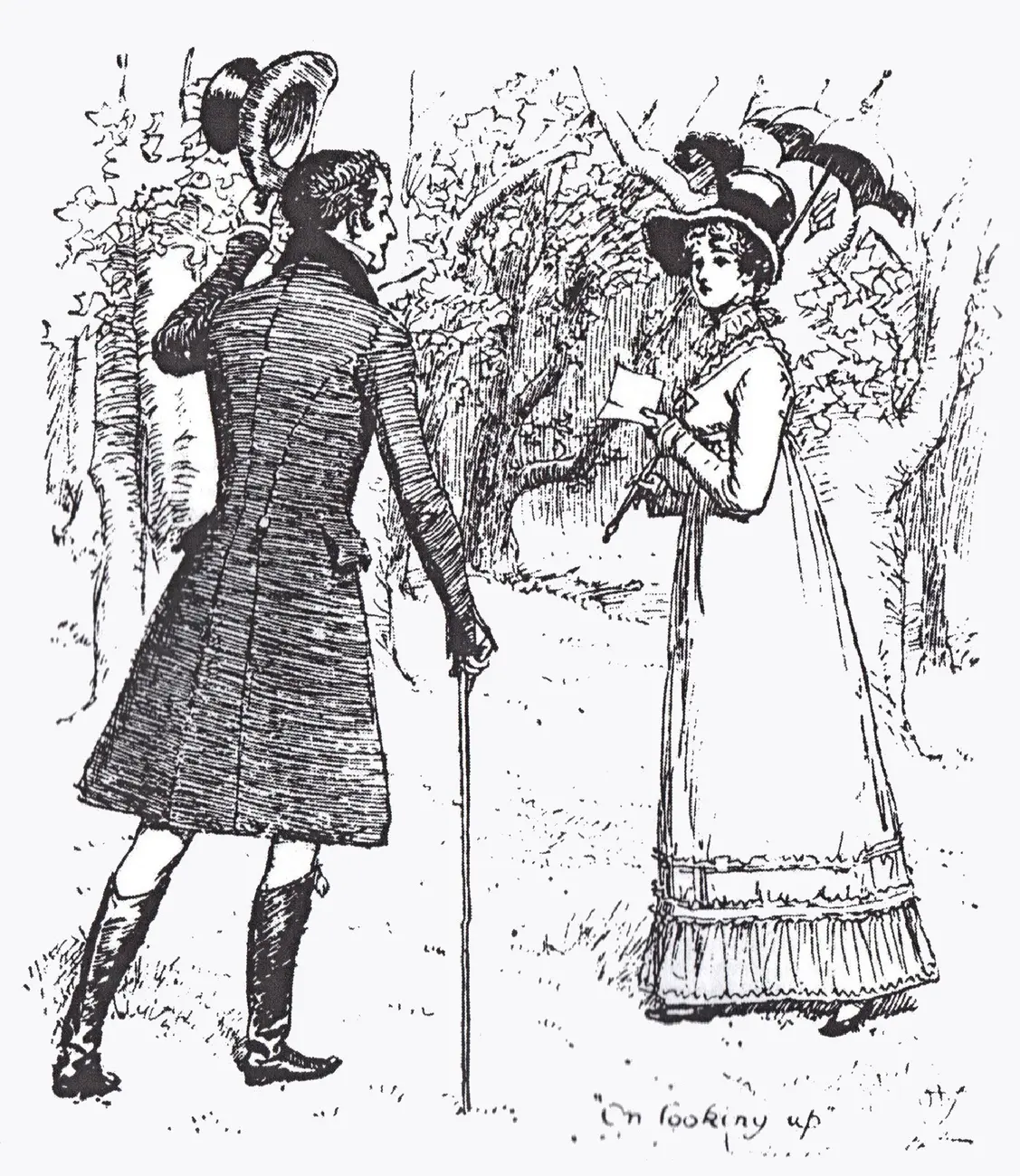
Pride and Prejudice opens with a sentence that is almost a joke: “It is a truth universally acknowledged, that a single man in possession of a good fortune, must be in want of a wife.” The truth being acknowledged belongs to the neighbourhood’s mothers, not to the narrator, and the rest of the novel sets Elizabeth Bennet’s quick judgement against that kind of received wisdom. It is a love story in which money, inheritance and reputation are never far from the conversation, and its sharpest scenes are conversations. Readers still find it funny because its people are recognisable: the anxious parent, the flatterer, the friend who gives bad advice kindly.
Austen wrote it first as First Impressions, between October 1796 and August 1797, and renamed it around 1811–1812. Thomas Egerton published it on 28 January 1813, in three volumes, anonymously; the title page said only “the Author of ‘Sense and Sensibility’”. She sold him the copyright for £110, having asked for £150, a bargain that cost her, because she had published Sense and Sensibility on commission and would have earned more. Its technique is free indirect speech, which lets the narrator slide into Elizabeth’s thoughts so smoothly that the reader adopts her judgements before she has tested them. It appeared in French in 1813.
Read the first impressions closely and watch how often they are wrong, on both sides. Notice where the narrator’s voice and Elizabeth’s merge, and where they separate, because that is where the book teaches you to doubt your own confidence. Let the dialogue carry the plot; Austen rarely explains what a line of talk is doing. The drawing here is by Hugh Thomson, from the illustrated edition published by George Allen in 1894, and it shows how late-Victorian readers pictured the Regency world. The pacing is gentle, the stakes are quiet, and the novel rewards patient attention to small things.
Introduction written for LitMundi with AI assistance and checked against the sources listed below.
Translation availability is still being researched. A draft is not evidence that no translation exists.
← Back to collection