
Хаджи-Мурат
Русский
Хаджи-Мурат · Russian, Wikisource transcription
ReadLeo Tolstoy · 1912
An Avar rebel commander defects to the Russians to save his family; a thistle, a tsar and a severed head frame the story.
Hadji Murat (Хаджи-Мурат), a novella by Leo Tolstoy written 1896–1904 and published posthumously in 1912, follows an Avar rebel commander who, to avenge himself and save his captive family, forges an uneasy alliance with the Russians he has been fighting in the Caucasus. The narrator opens with a crushed thistle that still lives. Tolstoy drew on Russian archives, including Hadji Murat’s own account of his life.
No translation is published in this interface language yet. You can read the original or another available edition.
Read · Русский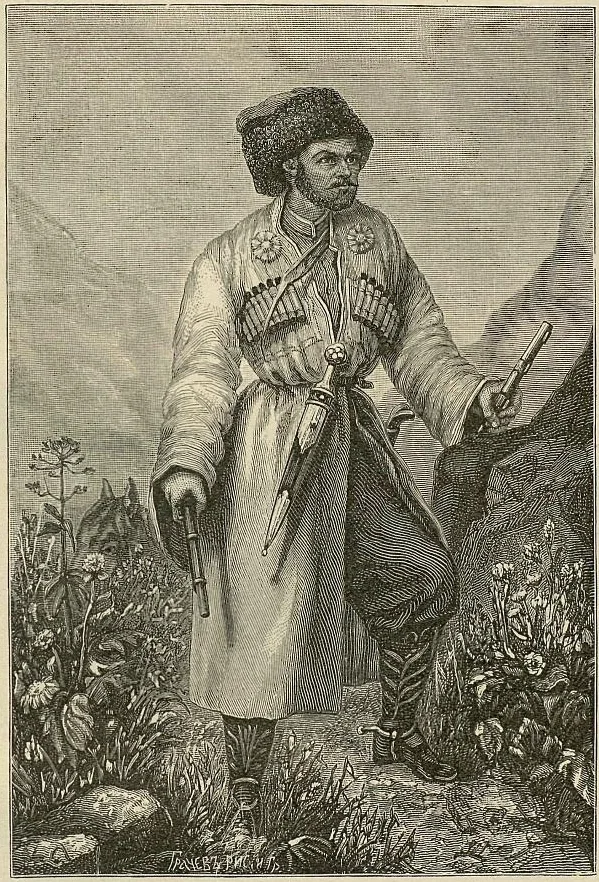
Hadji Murat (Russian: Хаджи-Мурат) is a novella by Leo Tolstoy, written between 1896 and 1904 and published posthumously in 1912, though, Wikipedia notes, not the full text until 1917. Its hero is an Avar rebel commander in the Caucasus who, to gain revenge, forges an uneasy alliance with the Russians he has been fighting. The story is set in the mid-nineteenth century, when Russian imperial expansion sought to subdue Chechen and Dagestani tribes. It stays worth reading because it puts one man between two powers: Imam Shamil holds his family captive, while the Russians will not give him an army. Tolstoy drew on Russian archives, including Hadji Murat’s own account of his life.
What sets the novella apart from much of Tolstoy’s other late fiction is its protagonist. According to the scholar Edmund Heier, cited on Wikipedia, Hadji Murat is unique among those works because its hero does not undergo a moral transformation or embrace an ethical ideal, and because it gives an unsparing picture of human violence and institutional cruelty. Tolstoy also devotes a whole chapter to Petrukha Avdeyev, a young Russian soldier who dies in a military hospital, and draws a satirical portrait of Tsar Nicholas I. Harold Bloom called the work his personal touchstone for the sublime of prose fiction.
As you read, watch the thistle at the start: the narrator spoils a crimson one while trying to uproot it, then finds another, run over and half-broken, that still looks resilient. Wikipedia reads it as an image of Hadji Murat. Notice too the leap forward, when soldiers bring his severed head to the fortress, and the nightingales that fall silent during the fight and sing again. Content note: war violence, a beheading and the display of a severed head, sentences of running the gauntlet, the fear of being shackled and sent to Siberia; nothing gratuitous. The Vietnamese text on this site is the site’s own translation, based on the Russian Wikisource text.
Introduction written for LitMundi with AI assistance and checked against the sources listed below.
Translation availability is still being researched. A draft is not evidence that no translation exists.
← Back to collection