
Strange Case of Dr Jekyll and Mr Hyde
English
Strange Case of Dr Jekyll and Mr Hyde · English, Project Gutenberg #42
ReadRobert Louis Stevenson · 1886
A London lawyer chases the story of a savage stranger and finds it leads to the door of his oldest, most respectable friend.
Gabriel Utterson, a sober London lawyer, grows uneasy about a friend’s will that leaves everything to a brutal stranger called Edward Hyde. Stevenson wrote the novella while largely bedridden in Bournemouth; it came out in January 1886 as a one-shilling paperback and sold close to 40,000 copies in six months. Its title has since become shorthand for a person with two faces.
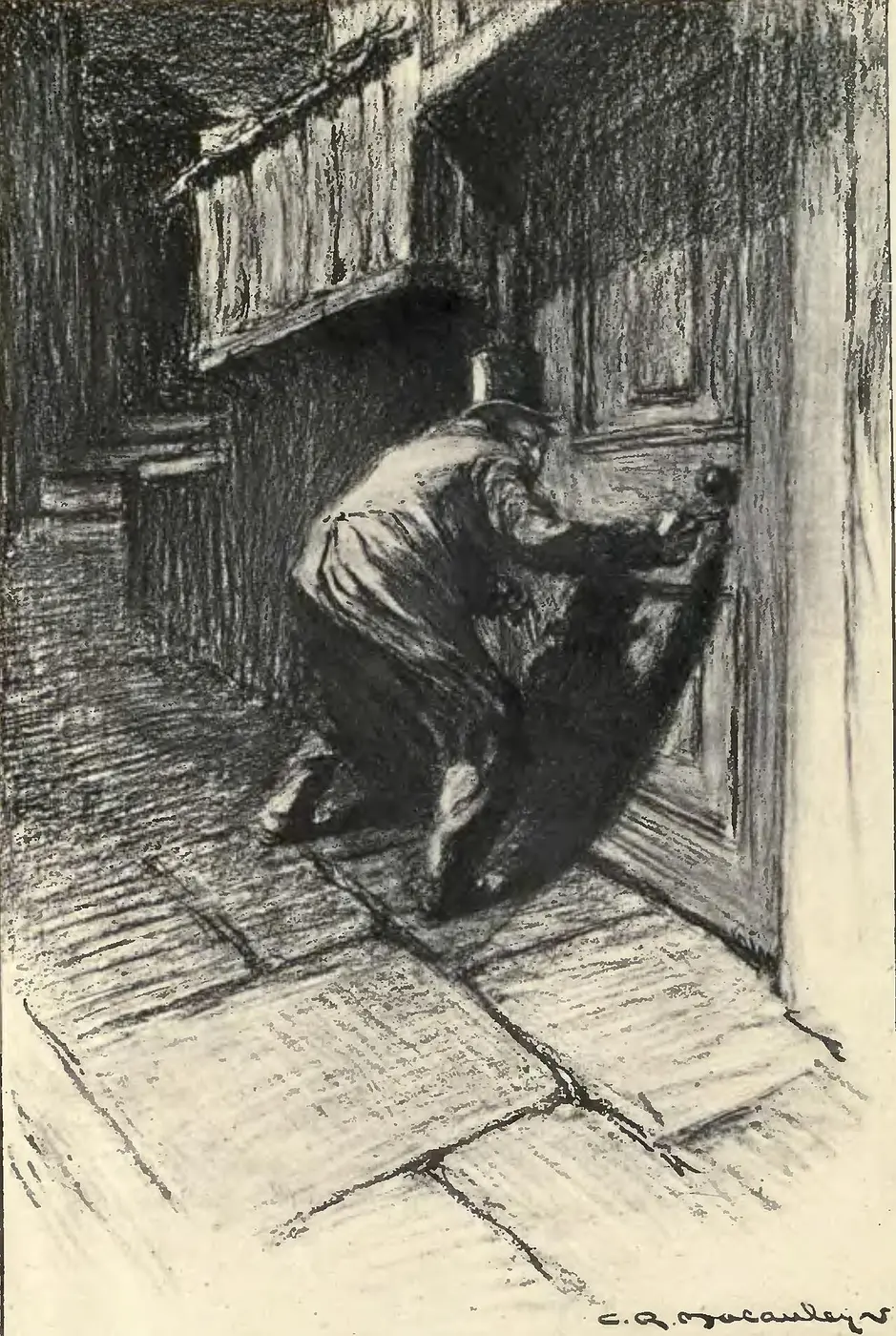
Strange Case of Dr Jekyll and Mr Hyde is a short Gothic novella built like a detective story. Its detective is Gabriel Utterson, a lawyer who distrusts gossip and grand theories, and who gathers facts about a will, a child trampled in the street and a murder until two written documents explain the rest. It still reads as alive partly because its title became a phrase: “Jekyll and Hyde” now describes someone who seems outwardly good and is sometimes shockingly cruel. The questions underneath have not aged either: what a respectable person does when nobody is watching, and what happens when a private habit stops being a choice.
Stevenson said in his essay “A Chapter on Dreams” that a dream gave him “three scenes, and the central idea of a voluntary change becoming involuntary”. The book appeared on 5 January 1886 as a one-shilling paperback, a “shilling shocker”; shops did not stock it until a favourable review in The Times on 25 January, and close to 40,000 copies sold within six months. The real novelty was its method. Instead of narrating from inside the monster, Stevenson keeps the reader beside a baffled lawyer and postpones the explanation to a physician’s letter and a confession. More than 120 stage and film versions followed, beginning with Richard Mansfield’s play in Boston in 1887.
Notice how little the book describes Hyde. Witnesses agree that he gives an impression of deformity, yet none can say where it lies; Stevenson lets dread work through the gaps. Notice, too, the London of locked doors, back lanes and fog, and how Utterson’s loyalty to a friend, more than curiosity, pushes him forward. Critics have read the story as a study of Victorian public and private morality, of addiction, of Scottish identity; it holds all three without announcing any of them. It is short enough for one sitting, and a second reading shows how carefully the early chapters were laid out.
Introduction written for LitMundi with AI assistance and checked against the sources listed below.
Translation availability is still being researched. A draft is not evidence that no translation exists.
← Back to collection