
A Cartomante
Português
A Cartomante · Português, Laemmert 1896
ReadMachado de Assis · 1884
A Rio woman secretly visits a fortune-teller, and a friendship between two men begins to come apart.
In Rio de Janeiro in 1869, Rita consults a fortune-teller about her lover Camilo, who is also her husband Vilela’s boyhood friend. Machado de Assis turns a small piece of superstition into a story about skepticism, desire and the irony of fate.
No translation is published in this interface language yet. You can read the original or another available edition.
Read · Português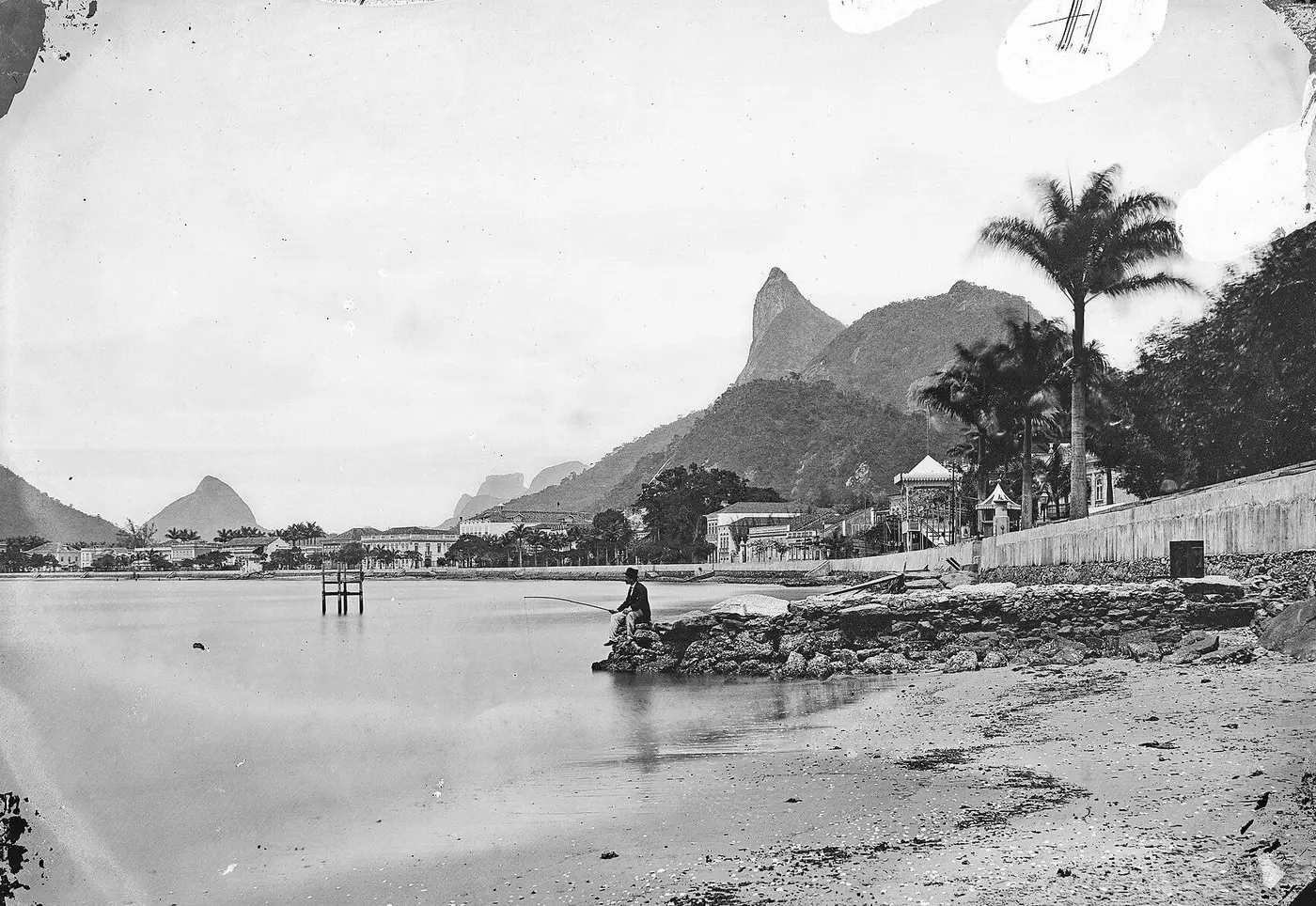
“A Cartomante” is a story about three people, one fortune-teller and a handful of letters, and it moves with the speed of a good newspaper piece. Rita, Camilo and Vilela are caught in a triangle in Rio de Janeiro in 1869, and the plot turns on whether anyone should believe the cards. Machado keeps the stakes small and domestic, then lets the consequences grow. It still reads as alive because the question it asks has not gone away: what do we do with fear when reason offers no comfort? One critic calls it one of Machado’s most popular stories, and it suits a reader meeting him for the first time.
Machado first published it in the Gazeta de Notícias of Rio de Janeiro on 28 November 1884, and it was gathered in the collection Várias histórias in 1896. The critic Luiz Antonio Aguiar notes that Machado often mocked belief in fortune-tellers in his newspaper chronicles; here he uses the irony of fate instead of a sermon. That choice is the technique worth studying: the narrator never tells you what to think about the cards, and the story’s tension comes from the gap between what the characters believe and what happens. The story has been adapted as a graphic novel, as films in 1974 and 2004 and as an opera by Jorge Antunes in 2014.
Read for the narrator’s tone. It is polite, teasing and a little detached, and it keeps changing who is in the right. Notice where the story is set, from Botafogo to the Rua dos Barbonos: Machado anchors a tale of superstition in real streets and ordinary afternoons. Notice too how each character explains events to himself or herself, and how little the explanation matters once the story moves on. Machado de Assis was born in Rio in 1839, co-founded the Brazilian Academy of Letters and is widely regarded as Brazil’s greatest writer; this is an easy first story to read him through.
Introduction written for LitMundi with AI assistance and checked against the sources listed below.
Translation availability is still being researched. A draft is not evidence that no translation exists.
← Back to collection