
The Call of the Wild
English
The Call of the Wild · English, Project Gutenberg #215
ReadJack London · 1903
A pampered California dog is stolen and shipped north, where the Klondike gold rush needs strong sled dogs.
Buck lives a sunlit life on a judge’s estate in California until a gardener, deep in gambling debts, sells him. Shipped to Seattle and then north, he is bought by Canadian mail dispatchers and put into harness as a sled dog in the Yukon. London’s short novel ran in The Saturday Evening Post in the summer of 1903 and appeared as a Macmillan book the same year.
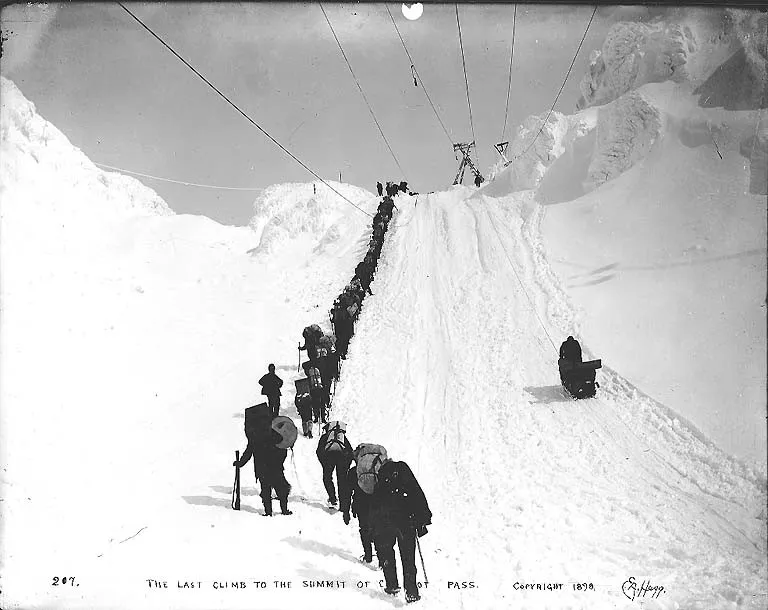
The Call of the Wild is a short adventure novel about a dog, and it reads as alive because the question under it is plain: what is left of a creature when comfort, rules and safety are taken away? Buck begins as a household pet on a California estate and is hauled into the Yukon during the Klondike gold rush, where the only law is whether the team can pull. London wrote it for a magazine, and the pace shows: short chapters, hard weather, one lesson in survival after another. It has stayed in print and in classrooms for over a century, and has been published in 47 languages.
London did not invent the animal story, but he gave it an unusual seriousness. He had gone to the Klondike himself in 1897 and stayed almost a year, so the cold, the trail and the greed around gold come from someone who had stood in them. He reportedly meant to write a story of about 4,000 words; it grew far beyond that. The Saturday Evening Post paid $750 for it, and Macmillan’s first printing of 10,000 copies sold out at once. It helped secure London’s reputation, and it has been filmed repeatedly since 1923, including a 1935 talkie.
Watch how much of the book is told from inside Buck’s experience, and how rarely the prose asks you to pity him. Notice the humans: some are careless, some cruel, and a few are decent, and the story judges them by what they do to the dogs. Pay attention to the small physical details, such as harness, ice, hunger and the order of the team, because the argument about instinct and civilisation is made through them. Read it as an adventure first; the larger questions arrive on their own.
Introduction written for LitMundi with AI assistance and checked against the sources listed below.
Translation availability is still being researched. A draft is not evidence that no translation exists.
← Back to collection