
Dubliners
English
Dubliners · English, Project Gutenberg #2814
ReadJames Joyce · 1914
Fifteen stories of Dublin, from a boy at a bazaar to a Twelfth Night party, by a writer who had left the city.
James Joyce’s Dubliners (1914) gathers fifteen stories of middle-class Dublin life, arranged from childhood through adolescence and maturity to public life. It opens with a boy and a dead priest in “The Sisters”, passes through the bazaar of “Araby”, and ends with a Christmastime party and a wife’s memory in “The Dead”. Joyce wrote the stories between 1904 and 1907, and the book took until 1914 to find a publisher.
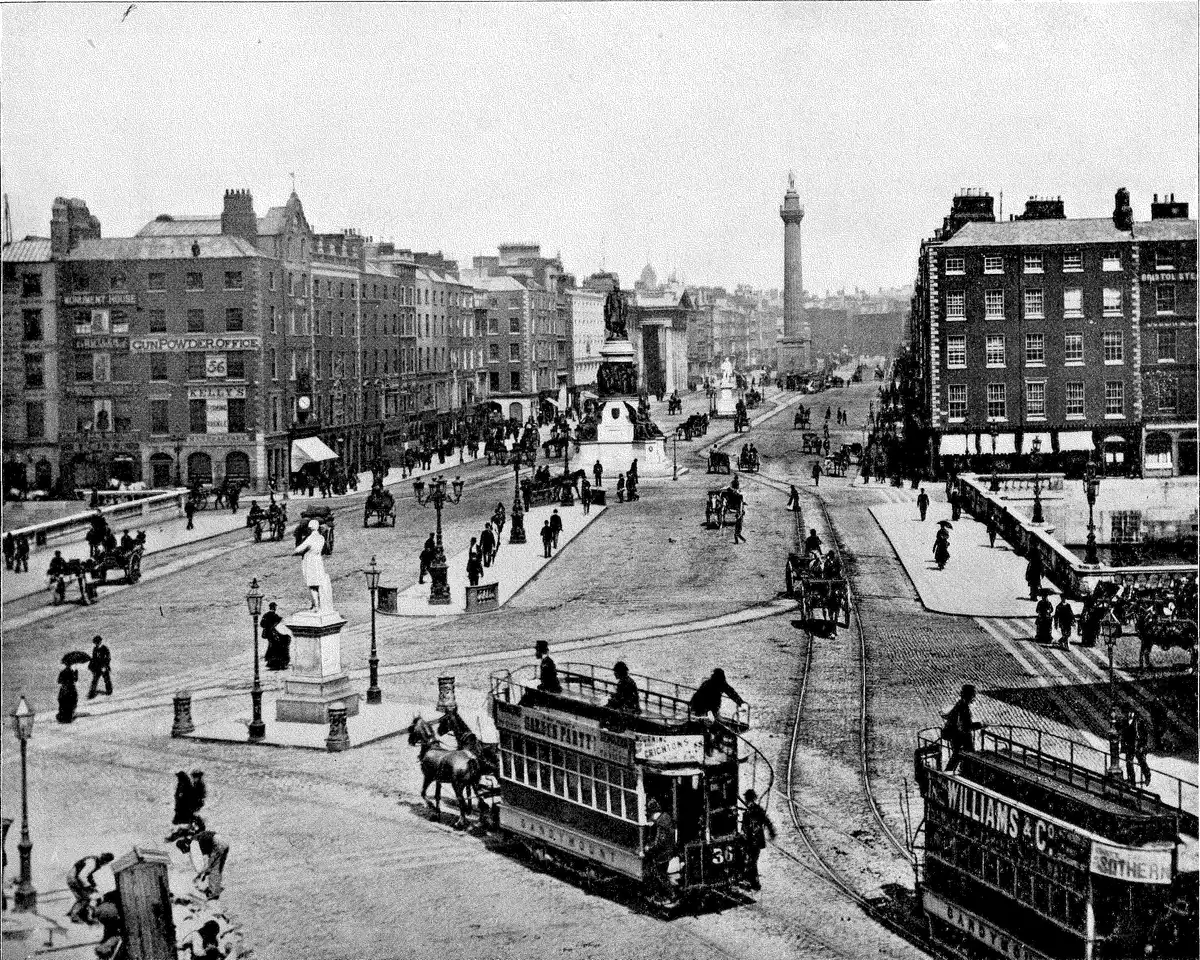
Dubliners is a collection of fifteen short stories by James Joyce, written from 1904 to 1907 and published in London by Grant Richards on 15 June 1914. Wikipedia describes it as a naturalistic depiction of Irish middle-class life in and around Dublin in the early twentieth century. Joyce called it a “nicely polished looking-glass” held up to the Irish, a first step towards their spiritual liberation. It is alive because the stories look plain on the surface, a boy’s errand, a quarrel in a pub, a party for three aunts, yet readers have argued over what they mean for more than a century.
The publishing history is part of the story. Between 1905 and 1914 Joyce submitted the book eighteen times to fifteen publishers. Grant Richards agreed to print it in 1905 but his printer refused to set “Two Gallants”; a Dublin firm, Maunsel & Roberts, later feared libel suits over the real streets and businesses named, and its printed sheets were burned. Stylistically, Wikipedia notes free indirect discourse and Joyce’s own phrase “scrupulous meanness” for a style that withholds authorial comment. The book also points ahead: many of its characters appear in minor roles in Ulysses.
Notice the order. The first three stories are narrated by boys; the later ones, in the third person, follow progressively older people. Joyce spoke of the “paralysis” of Dublin life, and the word appears on the first page, in “The Sisters”. In “Araby”, a boy promises a friend’s sister a gift from a bazaar but arrives late, when most stalls are closed. “The Dead” is the longest piece, about 16,000 words, and Wikipedia reports that T. S. Eliot described it as one of the greatest English-language short stories ever written. Content note: drink, death, a priest’s damaged reputation, a predatory stranger, and a father’s violence recur.
Introduction written for LitMundi with AI assistance and checked against the sources listed below.
Translation availability is still being researched. A draft is not evidence that no translation exists.
← Back to collection