
十三夜
日本語
十三夜 · 日本語, 文藝倶樂部 閨秀小説號 1895(青空文庫)
ReadIchiyo Higuchi · 1895
On the thirteenth night of the moon, a young wife slips out of her husband’s house and goes home to her parents.
Oseki, married seven years to a government official, leaves his house one night and returns to her parents. What she says there, and what her family answers, makes up most of this short story. Higuchi Ichiyō writes it in a few quiet scenes, with the moon as the only witness.
No translation is published in this interface language yet. You can read the original or another available edition.
Read · 日本語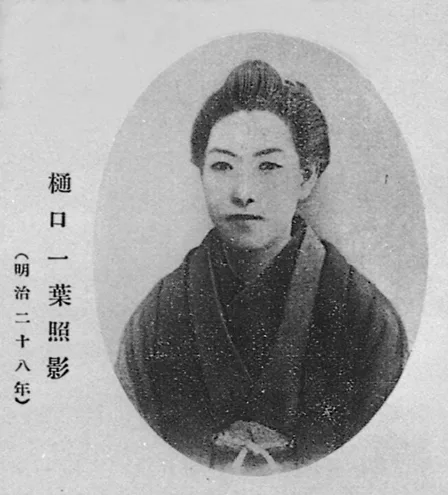
The Thirteenth Night is a short story of a few scenes and one decision. Oseki comes from a poor samurai family and has married up, into the household of an official named Harada Isamu. Seven years in, after the birth of her son Tarō, her husband has turned cold. She goes home to her parents on the thirteenth night of the moon. What follows is a conversation across a family’s expectations, and Higuchi lets each person speak from a position that makes sense. It still reads as alive because nobody in it is stupid or cruel on purpose; the pressure comes from how things are arranged, and that kind of pressure has not gone away.
Higuchi Ichiyō published it in December 1895, in the special issue of Bungei Kurabu devoted to women writers. She was in the middle of the brief period, 1894 to 1896, of her mature work, and she died of tuberculosis in November 1896, aged twenty-four. Wikipedia describes her as Japan’s first professional woman writer of modern literature, and her portrait appears on the 5,000 yen banknote introduced in 2004. The story was adapted for the stage by Kubota Mantarō in 1947, and it opens the 1953 omnibus film Nigorie, alongside two other Ichiyō stories. It is still read in Japan as a model of how little plot a story needs when the people in it are fully drawn.
While reading, listen to what the parents say and what they do not. The father’s counsel, the mother’s anger and Oseki’s own reserve each carry a different judgment on the marriage, and the story never says which is right. Watch the moon: the title makes the night itself a character. Higuchi’s Japanese is in a literary style close to classical prose, which is why modern editions and translations often carry notes. Keep an eye on what the story does with the road home: much of its weight is carried by a single short journey.
Introduction written for LitMundi with AI assistance and checked against the sources listed below.
Translation availability is still being researched. A draft is not evidence that no translation exists.
← Back to collection