
Heart of Darkness
English
Heart of Darkness · English, Project Gutenberg #219
ReadJoseph Conrad · 1899
On a ship at anchor in the Thames, a sailor recounts his steamer journey up an African river in search of a man named Kurtz.
Charles Marlow, waiting for the tide on the Thames, tells his companions how he took a job captaining a river steamer for a Belgian ivory company in Africa. His task is to find Kurtz, a celebrated trader who has gone silent. Conrad drew on his own 1890 service on the Congo, and the story has been argued over ever since.
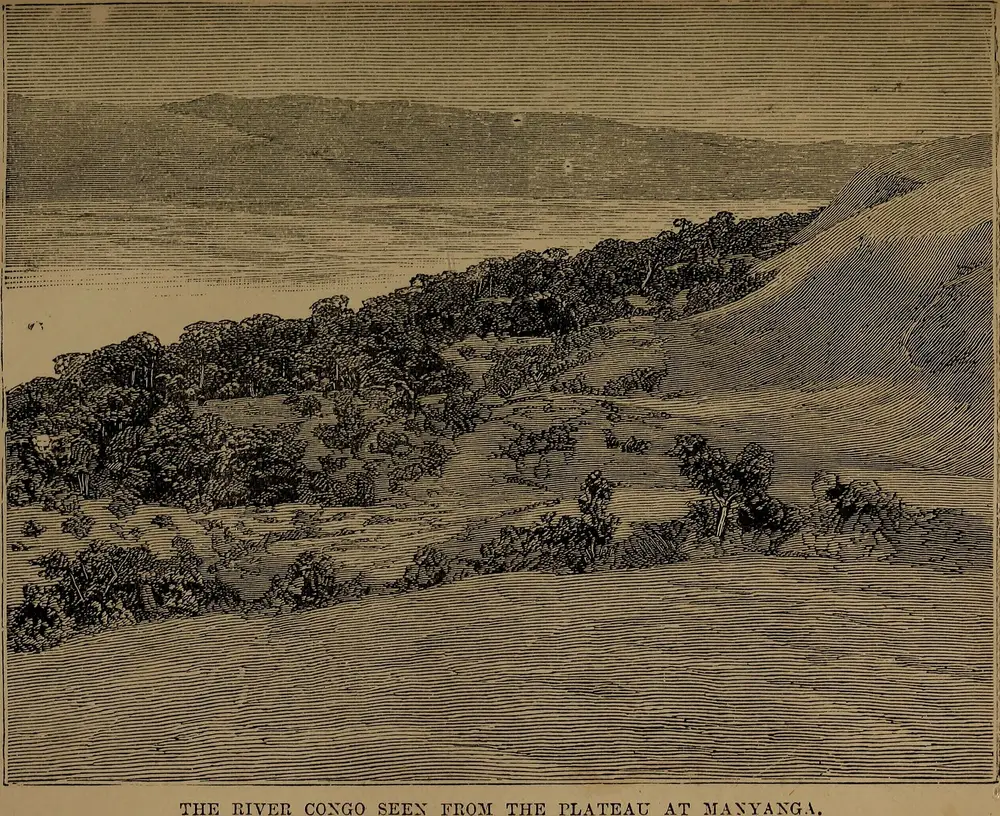
Heart of Darkness is about thirty thousand words long and has been read, assigned and argued over for well over a century. It opens on the Thames, where the sailor Marlow tells his story in the dark, and almost everything after that is told at one remove: what Marlow saw, what he was told, what he guessed. That distance is the book’s method, and it is why it still unsettles. It asks how a story about faraway cruelty is told to people comfortable at home, and who is entitled to tell it.
Conrad published it as a three-part serial in Blackwood’s Magazine in February, March and April 1899; the February issue was the magazine’s 1,000th. It reached book form on 13 November 1902 in Youth, A Narrative; and Two Other Stories. The river is never named, but the Congo Free State was then King Leopold II’s personal colony, and Conrad had commanded a steamer there in 1890. In 1975 Chinua Achebe called the book “an offensive and deplorable book” for how it treats Africans, and Things Fall Apart (1958) was written partly in answer to Conrad. T. S. Eliot took an epigraph from it for The Hollow Men.
Notice the frame: who is speaking, to whom, and how often Marlow admits he cannot make the experience clear. Notice what the story shows of the colonial enterprise and what it leaves unseen, and ask whether the narrator’s blind spots are the author’s. Vietnamese readers will recognise the afterlife of the story in Coppola’s Apocalypse Now (1979), which moves the journey from the Congo to the Vietnam War. The book repays slow reading, a page or two at a time.
Introduction written for LitMundi with AI assistance and checked against the sources listed below.
Translation availability is still being researched. A draft is not evidence that no translation exists.
← Back to collection